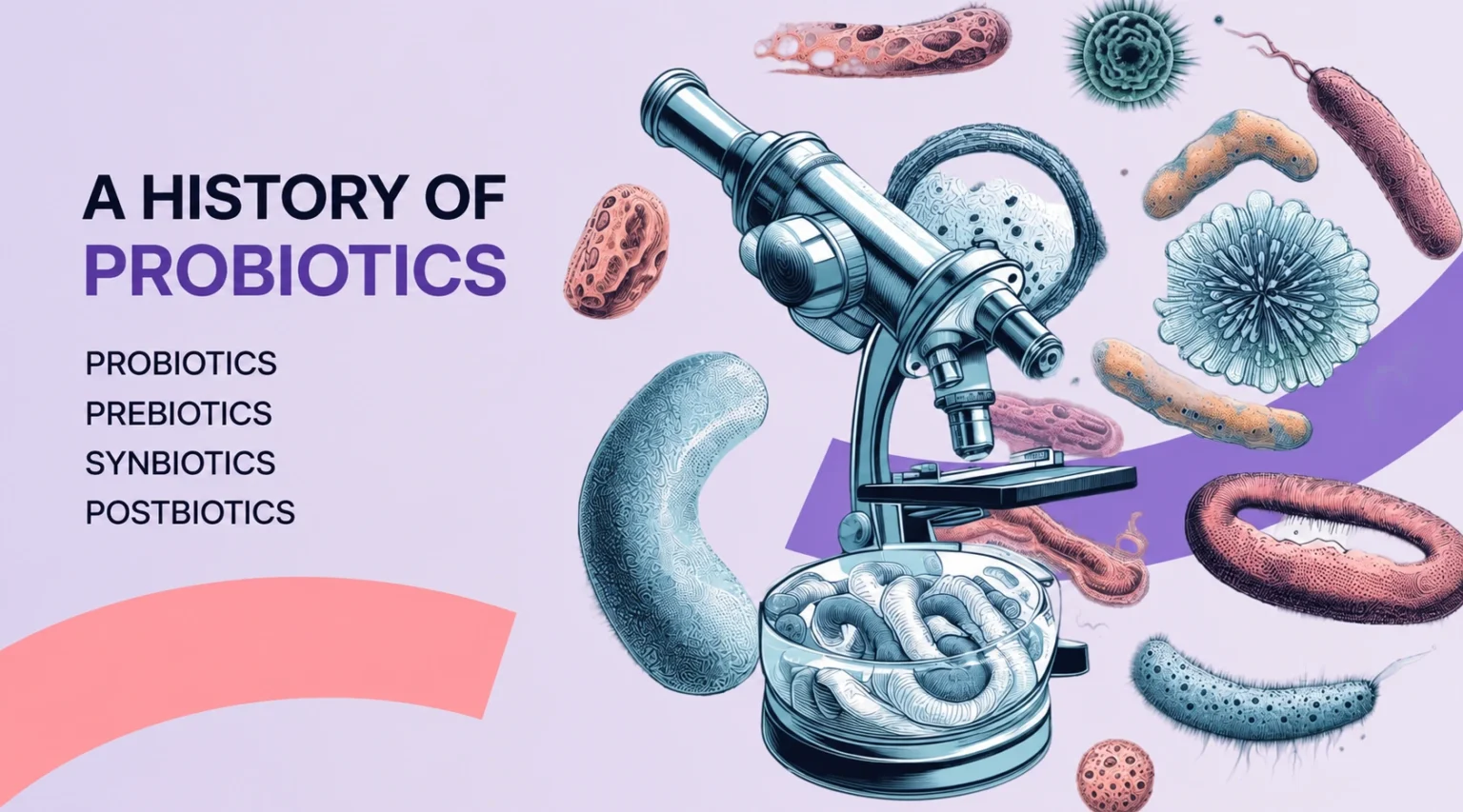
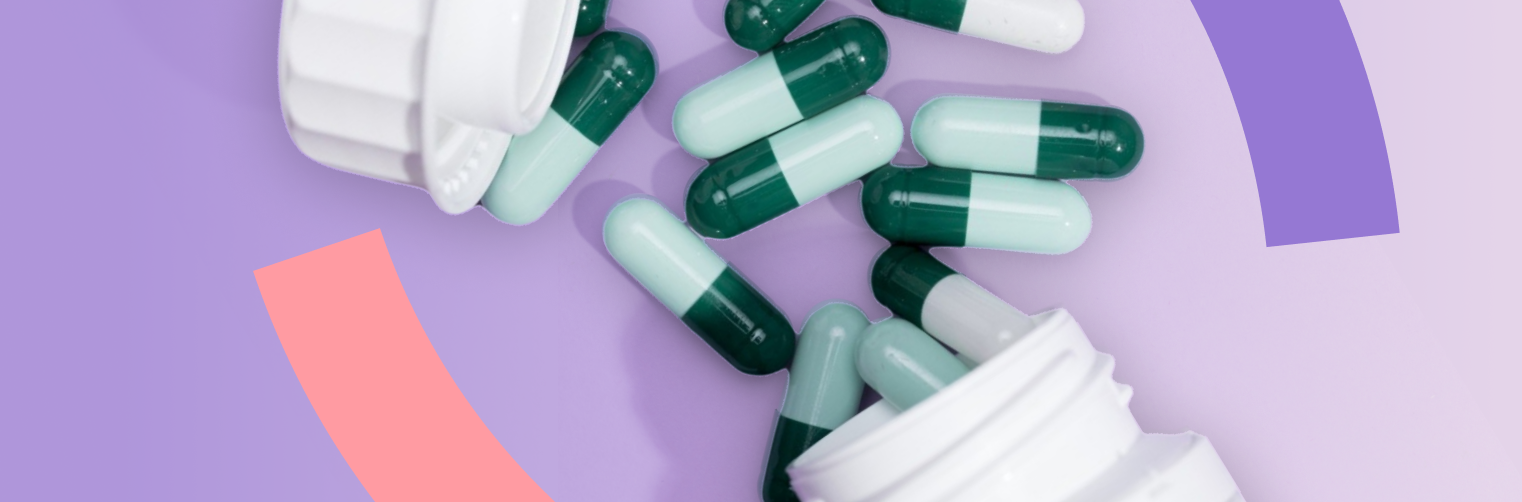
Probiotic, prebiotic, synbiotic, and postbiotic – history
PRObiotics, 1960.
To address the problems of dysbiosis, probiotics first appeared. The idea was to „introduce“ foreign beneficial probiotic bacteria into the body after our own have decreased due to antibiotic use or for various other reasons. It seemed that the new „inhabitants“ would adapt in our intestines, eventually settle there, and thus restore the balance of the microbiota.
A probiotic is a product containing live probiotic microorganisms. Probiotic bacteria affect the body by producing important enzymes, cellular bioproducts, and various biologically active substances called metabolites in the favorable conditions of the intestines, which are necessary both for their own well-being and for the well-being of the organism as a whole.
Probiotic bacteria are isolated from humans, animals, plants, various food products, etc., after which they are cultivated (multiplied) in various liquid nutrient media in industrial quantities. If liquid probiotic products are dried, dry probiotics are obtained, which can be tableted, encapsulated, etc. When liquid or dry probiotics are added to various other products, different probiotic products are obtained.
But 30 years later, doctors and scientists became convinced that probiotics do not colonize our bodies! It turned out that the foreign probiotic strains taken are not equivalent to the individual’s own microbiota and cannot exist long in humans. One of the reasons for this is the lack of biocompatibility with the resident bacteria and the local immune system. Our immune system, operating on the principle of „self or foreign,“ rejects foreign microorganisms and eliminates them within 1-2 days. Even the most effective probiotics act quite limitedly and short-term and fail to secrete, ferment, and synthesize the metabolites necessary for the well-being of the body.
In recent years, products containing probiotics have literally flooded the market. As more and more people seek natural and non-pharmaceutical ways to maintain their health, manufacturers have responded with probiotic offerings in everything possible and impossible: from dairy products and chocolate bars to powders and tablets. Currently, there is a large number of probiotic products, and they are able to overwhelm even the most conscientious buyers. In some respects, the industry has developed so rapidly that now no one can say which probiotics are somewhat useful and which are just a waste of money.
PREbiotics, 1995.
If the foreign ones don’t work, then let’s strengthen our own! Thus, prebiotics appeared – „food“ for our bacteria.
Prebiotics are nutritional components – soluble fibers that are not digested or absorbed in the upper parts of the gastrointestinal tract, but are fermented by the human colon microbiota and stimulate its growth and vital activity.
The main types of prebiotics are: di- and trisaccharides; oligo- and polysaccharides; polyhydric alcohols; amino acids and peptides; enzymes; organic low-molecular and unsaturated higher fatty acids; antioxidants; plant and microbial extracts, etc.
Prebiotics are found in dairy products, cornflakes, cereals, bread, turnip, chicory root, Jerusalem artichoke, leek, onion, garlic, beans, peas, artichoke, asparagus, bananas, baobab fruit, and many other products.
Ultimately, if we properly feed the beneficial bacteria, they should become stronger and displace the harmful ones.
With a balanced gut microbiota, taking prebiotics makes sense, but in dysbiotic conditions, taking prebiotics is questionable. In intestinal dysbiosis, on one hand, probiotic bacteria decrease, and on the other, there is a large population of pathogenic microorganisms. The main characteristics of the metabolism of most bacteria, whether probiotic or pathogenic, are almost identical. Therefore, prebiotics, in addition to stimulating the development of probiotic microbiota, are also an ideal medium for the growth of pathogenic microorganisms. It turns out that along with the beneficial bacteria, prebiotics also feed the harmful ones!
The conclusion is that in intestinal dysbiotic conditions, the situation at best will not change, and at worst – will worsen. The problem was not solved.
How can we make probiotics stay in our bodies as long as possible? The idea arose to „feed the foreigners.“ That is, to combine probiotics with prebiotics! Thus, synbiotics appeared.
Synbiotics refer to nutritional or dietary supplements that combine probiotics and prebiotics in the form of synergy, where the overall result should be more effective than the individual one.
The symbiotic concept was first introduced as „mixtures of probiotics and prebiotics that beneficially affect the host by improving the survival of implanted live probiotic bacteria in the gastrointestinal tract through selective stimulation of the growth and/or activation of the metabolism of one or a limited number of health-beneficial probiotic bacteria, thereby improving the well-being of the host.“
It seemed that the solution would put an end to the issue of restoring the balance of the gut microbiota. But the immune system still recognized the „guests“ and mercilessly dealt with them, and in intestinal dysbiotic conditions, prebiotics continued to feed the pathogens as well! As of 2023, research on this concept lacks evidence that there are sufficient benefits to the use of synbiotics.
Thus, this idea also proved unsatisfactory.
POSTbiotics, 2010.
Scientists continued their research, which led to the birth of a fundamentally new probiotic product.
Let us recall. Why do we take probiotics? To secrete, ferment, and synthesize in our intestines important enzymes, cellular bioproducts, and various biologically active substances called metabolites, necessary both for the well-being of the microbiota and for the well-being of the organism as a whole. Why do we take prebiotics? To be used as a nutritional medium by probiotic bacteria, which will secrete, ferment, and synthesize the respective metabolites in our intestines. And synbiotic? For the same purpose. To support the microbiota in producing metabolites. That is, the function of probiotics and prebiotics is the same – to provide our body with the necessary metabolites.
Therefore – the solution is obvious.
Instead of giving our body probiotics and hoping they will manage to produce enough of the necessary metabolites in our intestines, as well as prebiotics, hoping they will contribute to the production of these metabolites, we should give it these metabolites directly. And in sufficient quantity. Ingenious and simple.
Thus, after 50 years, as a continuation of the probiotic concept, postbiotics appeared.
Postbiotics are precisely those metabolites produced by probiotic bacteria and necessary for the well-being of the organism. Only, they are produced outside the body, in an environment containing all the nutrients and other substances necessary for the development of probiotic bacteria, and under excellent favorable conditions created for them, without conflict with the body’s own microbiota and immune system.
Postbiotics do not contain live microorganisms, but only the metabolites secreted, fermented, and synthesized by them and/or their lysates and structural elements.
By taking a postbiotic, the body receives all the metabolites ready-made, which under ideal conditions should be produced by its own probiotic bacteria.
By taking a postbiotic, the balance of the body’s own gut microbiota is maintained, the growth of pathogens is suppressed, the digestive process is supported, toxins and allergens are deactivated, the immune system is stimulated, and the overall condition of the body is improved.
As of 2023, research on this concept proves that there are sufficient benefits to using postbiotics.
Start typing to see posts you are looking for.
Cookies
Our site uses cookies to improve your experience. You can manage your preferences or accept all. Learn more.
Cookie settings
Strictly necessaryNecessary for the operation of the site. Cannot be turned off.
AnalyticalThey help us improve the experience on the site.
MarketingFor personalized ads on Facebook and Google.




 Bestseller