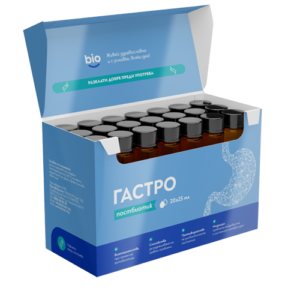
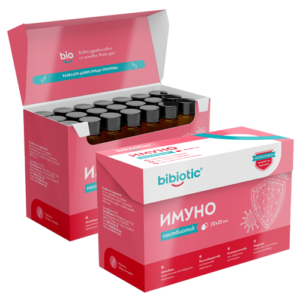
Bibiotic postbiotic

The most frequently asked questions and our answers

The postbiotic, also known as parabiotic or metabiotic, refers to a new class of probiotic products – even more beneficial and much more effective than prebiotics, probiotics, and synbiotics. Postbiotics possess all the advantages of probiotics, but none of their disadvantages. On the contrary, they act faster, more directly, and more effectively for our health. In fact, these are metabolic products of beneficial probiotic bacteria that inhabit the human body and participate together with it in the formation of a healthy microbiocenosis.

Bibiotic's postbiotic is a naturally created liquid, natural product from probiotic bacteria and is significantly different from synthetic postbiotics available on the market in dry, encapsulated, or tablet form. They are made from chemical ingredients that replace natural metabolites. However, chemical metabolites cannot in any way replace natural metabolites, neither in quality nor in quantity. Just like artificial honey. The color is like real honey and the taste is the same – but something is not right. It simply is not as beneficial because it does not contain the useful substances of natural honey.
Bibiotic's postbiotic is liquid to provide you with the full range of metabolites produced by the bacteria. In dry postbiotics, many of the valuable substances are lost during drying.

Bacteria in the gastrointestinal tract ferment the food consumed by humans, turning nutrients into other substances called metabolites. Metabolites, in turn, influence the biochemical reactions of the intestinal bacteria that produced them, contributing to their development and preservation – autostimulation.

A postbiotic can be defined as a product produced by beneficial bacteria. These are various active compounds (metabolites) produced by probiotic bacteria during their life processes, for the protection of both their own and our health.
The postbiotic has a comprehensive, multifaceted, and systemic effect on the human body.

A prebiotic is food for beneficial bacteria, a probiotic is the beneficial bacteria themselves, a synbiotic is a combination of probiotic and prebiotic, and a postbiotic (also called parabiotic or metabiotic) is a product produced by beneficial bacteria. These are various active compounds (metabolites) produced by probiotic bacteria during their life processes, for the protection of both their own and our health.

Postbiotics contain various metabolic products produced by intestinal probiotic bacterial strains during their population process, which promote the growth of beneficial (symbiotic) and suppress the development of harmful (pathogenic) microbiota, as well as serve as a source of nutrients and other valuable substances for the intestinal mucosa and the body as a whole.

Human microbiota (formerly “microflora”) – a stable microbial community that lives in specific areas of the human body. Human microbiota is an integral part of the human being. Without it, a person cannot exist, just as without food, water, air, and gravity. The microorganisms inhabiting the human body reach 3.9x10¹³ (39 trillion), which is 1.3 times more than the cells of the body (30 trillion).
There are several main microbiotas in the human body – of the skin, eyes, oral cavity, respiratory tract, reproductive system, and gastrointestinal tract.

The metabolites contained in the postbiotic can be conditionally divided into six groups:
Nutritional (amino acids, peptides, glucose, microelements, vitamins, etc.) – serve as a source of essential and easily assimilable nutrients for the body.
Nutritional-anti-inflammatory (short-chain fatty acids) – a source of essential nutritional and anti-inflammatory substances for the cells of the colon. They maintain the balance of intestinal microbiota and the water-electrolyte balance of the intestines. They activate local and systemic immunity.
Digestive (enzymes) – break down complex nutrients into simple ones to be absorbed by the body.
Detoxifying (ferments) – metabolize xenobiotics, destroy carcinogens and mutagenic metabolites.
Antimicrobial (organic acids, hydrogen peroxide, antibiotic-like substances, bacteriocins, etc.) – suppress the activity and population of pathogenic microorganisms and support the development of probiotic bacteria.
Immunological – stimulate the production of immunoglobulins and cytokines that regulate innate and adaptive immunity.

By taking a postbiotic, the body receives ready-made metabolites that, under other conditions, would have to be produced by its probiotic bacteria. By taking a postbiotic, the equilibrium state of the intestinal ecosystem is maintained, immunity is regulated, and the general condition of the body is improved.
The postbiotic creates a favorable environment in the intestinal tract for the population of your own beneficial bacteria and suppresses the development of pathogens. In a comfortable environment, your probiotic bacteria successfully perform their functions, synthesize the necessary signaling molecules, amino acids, peptides, vitamins, fully participate in the synthesis and metabolism of hormones, promote the absorption of microelements, and perform many other functions.

Bibiotic's postbiotic is a natural product. It does not contain GMOs, GMMs, preservatives, colorants, or similar substances.

PROPHYLACTICALLY – course of at least 20 days:
For children up to 1 year – morning and evening, a quarter of a vial (2.5 ml) dissolved in water, milk, juice, or puree (half a vial per day). 4 to 6 courses per year.
For children from 1 to 7 years – morning and evening, half a vial (7.5 ml) before meals, dissolved in water, milk, juice, or compote (one vial per day). 3 to 5 courses per year.
For children over 7 years and adults – morning or evening, one vial (15 ml) before meals (one vial per day). 2-4 courses per year.
In this way, one package of postbiotic will last for a 20-day course for children up to 1 year and 10 days for the others. There is no point in increasing the daily dose; it is more important to extend the duration of intake.
The more pronounced the disorders in your body, the longer the course of postbiotic intake should be. Probiotic bacteria need time to colonize the intestines, multiply, and restore microbial balance. The course can last up to 60 days.

FOR MORE SERIOUS HEALTH PROBLEMS – course of at least 40 days. The first 10 days, a double dose is taken. For children over 7 years and adults – morning and evening, one vial (15 ml) before meals (two vials per day). The next 30 days – the prophylactic dose. The course can last up to 90 days.

WHEN TAKING ANTIBIOTICS – double dose during antibiotic intake and at least 10 days – the prophylactic dose.

Yes. The postbiotic does not interfere with the intake of any medications, does not interact with them, does not suppress their action, and does not accelerate their absorption or elimination from the body.

Antibiotic therapy aims to destroy harmful (pathogenic) bacteria. However, along with them, the antibiotic also destroys beneficial (probiotic) bacteria. During antibiotic intake, the use of probiotics is useless, as antibiotics prevent their development. By destroying probiotic bacteria, the vital metabolites they produce in the body are also reduced. During antibiotic intake, it is recommended to take a postbiotic. The antibiotic does not affect it. In turn, it will supply the body with the missing vital metabolites, help limit the impact of the antibiotic on probiotic bacteria, and contribute to their faster recovery after antibiotic therapy.

The postbiotic can be stored for 12 months at room temperature up to 25 °C, away from children and direct sunlight. An opened vial should be stored no more than 12 hours at room temperature or 14 days in a refrigerator at a temperature of 2 to 6 °C.

At the AUTOBIOTIC bioproduction facility, Pleven, Bulgaria.

Start typing to see posts you are looking for.