Until now, it seemed that the obvious answer to the question „What should I do in case of dysbiosis?“ was the recommendation to take a probiotic, whose probiotic bacteria would restore the balance of our gut microbiota. It sounded reasonable, but! Modern research has shown that the human microbiome is strictly individual and unique. Each of us has our own, developed over time, composition of microorganisms, which can be called a microbial ID card. Even identical twins form different personal microbiomes. The microbiome is a complex and balanced ecosystem that closely interacts with our body and the environment and plays an important role both in maintaining the health of our body and in its recovery. Naturally, questions arose. Is it possible to create a complex of probiotic bacteria suitable for everyone? Will our own bacteria allow coexistence with the ingested „foreign“ probiotic bacteria? Will our immune system react to the ingested „foreign“ probiotic bacteria? Will the ingested probiotic bacteria find favorable conditions for their development in our gut? And if the answers are negative, then what? Yes, indeed, the answers are negative. But when there are answers to the questions, it is only a matter of time before science solves the arising problems. And they have already been solved.
So!
So that their probiotic bacteria reach our intestines and start their beneficial activity there – producing biologically active substances called metabolites, necessary both for their own well-being and for the well-being of the organism as a whole.
It is precisely through these metabolites that bacteria maintain the balance of the native gut microbiota, suppress the growth of pathogens, deactivate toxins and allergens, support the digestive process, and stimulate the immune system.
After taking a probiotic, the process of metabolite production can begin after about 8-12 hours.
But!
Under several conditions.
First, that the probiotic bacteria reach the intestines and in sufficient quantity. This does not always happen, because they must overcome many obstacles, evolutionarily created to fight „foreign“ microorganisms, such as saliva, gastric acid, and bile. A very large part of them will not be able to overcome these and will perish.
Second, those that reach the intestines must find there the necessary conditions for population and the appropriate nutrients for their development. This is not so easy, because the intestines contain various enzymes, bacteriocins, and all kinds of antimicrobial substances designed to destroy „foreign“ bacteria. That is, many of them will also perish. The use of foods with nitrates, pesticides, and antibiotics, as well as the intake of various medications, will suppress the development of the remaining ones. Moreover, we do not always eat food suitable for the bacteria.
And third, the remaining probiotic bacteria, despite everything, must be biocompatible with the host organism in order to coexist with it. But the ingested probiotic bacteria are „foreign“ to the host organism, like bacteria ingested with food, and are biocompatible neither with the local immune system nor with the „native“ microbiota. As a result, they are usually rejected, as in organ and tissue transplantation, and are naturally excreted from the body in a transient manner. They pass transit through the intestines, usually for 1-2 days.
CONCLUSION: Due to their short stay in the intestinal tract, as well as the unsuitable conditions for their development, probiotics produce a small amount of metabolites, which cannot exert the necessary influence on the well-being of the native microbiota and the macroorganism as a whole.

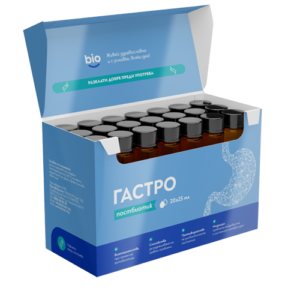
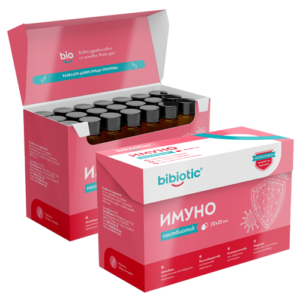
Well, in place of PRObiotics, comes a new generation of probiotic products called POSTbiotics.
Postbiotics are precisely those biologically active substances (metabolites) produced by probiotic bacteria and necessary for the well-being of the organism. Only, they are produced outside the body, in an environment containing all the nutrients and other substances necessary for the development of probiotic bacteria, and under excellent favorable conditions created for them, without conflict with the „native“ microbiota and immune system, without fighting gastric acid, various enzymes, bacteriocins, and all kinds of antimicrobial substances.
Postbiotics do not contain live microorganisms, but only the secreted, fermented, and synthesized metabolites and/or their lysates and structural elements.
Many believe that a new generation of products means only a slightly improved previous one. A marketing trick to sell at a higher price. In this case, this is not so. Postbiotics are not just a new, but an innovative generation of probiotic preparations, fundamentally different from probiotics. Postbiotics combine all the advantages of probiotics but are free from all their disadvantages.
By taking a postbiotic, the body receives ready-made all the metabolites that, under ideal conditions, its own probiotic bacteria should produce.
The postbiotic does not need favorable conditions in the intestinal tract, nor specific nutrients, nor biocompatibility with the local immune system. The postbiotic is not affected by either stomach acid, various enzymes, bacteriocins, or antimicrobial substances in the intestines. Moreover, it is not affected by antibiotics or other medications.
By taking a postbiotic, the balance of the native gut microbiota is maintained, the growth of pathogens is suppressed, the digestive process is supported, toxins and allergens are deactivated, the immune system is stimulated, and the overall condition of the body is improved. The postbiotic is especially effective in viral infections and antibiotic use, as well as in various gastroenterological problems, dermatological problems, and immunological problems.
And finally!
Postbiotics can be natural, i.e. containing natural bioactive substances produced by bacterial strains, and synthetic, which contain synthetic analogues or copies of natural bioactive substances.
Synthetic postbiotics, as a rule, contain analogues or copies of only a very small part of the naturally produced metabolites. They are usually offered in dry form – encapsulated or tableted. They cannot be a worthy analogue of natural postbiotics. Like artificial honey: the appearance, color, and taste are the same, but something is wrong – many natural ingredients are missing.
Natural postbiotics can be liquid or dry. The dry ones are usually encapsulated or tableted. The liquid ones are preferable, as many of the bioactive substances are lost during drying. In addition, liquid forms are more easily absorbed by the body.
Our site uses cookies to improve your experience. You can manage your preferences or accept all. Learn more.