



 Bestseller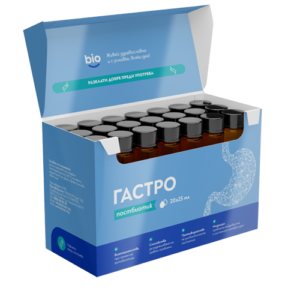

Probiotic for gas or postbiotic? Here’s what really reduces a bloated abdomen

Imagine going about your day without that uncomfortable, heavy, bloated belly that makes you feel uncomfortable in your own clothes. Bloating, gas, and intestinal rumbling are issues that affect millions of people, turning eating from a pleasure into a source of worry. In search of a solution, many of us reach for a probiotic for bloating and gas. But is this the most effective way to go?
The science of gut health is advancing rapidly, and today a more direct and innovative approach is emerging on the horizon – postbiotics . In this article, we’ll take an in-depth look at why the traditional approach to reducing belly fat may not be enough, and how postbiotics offer a faster, more targeted solution to the problem.
What exactly is a bloated belly and why does it appear?
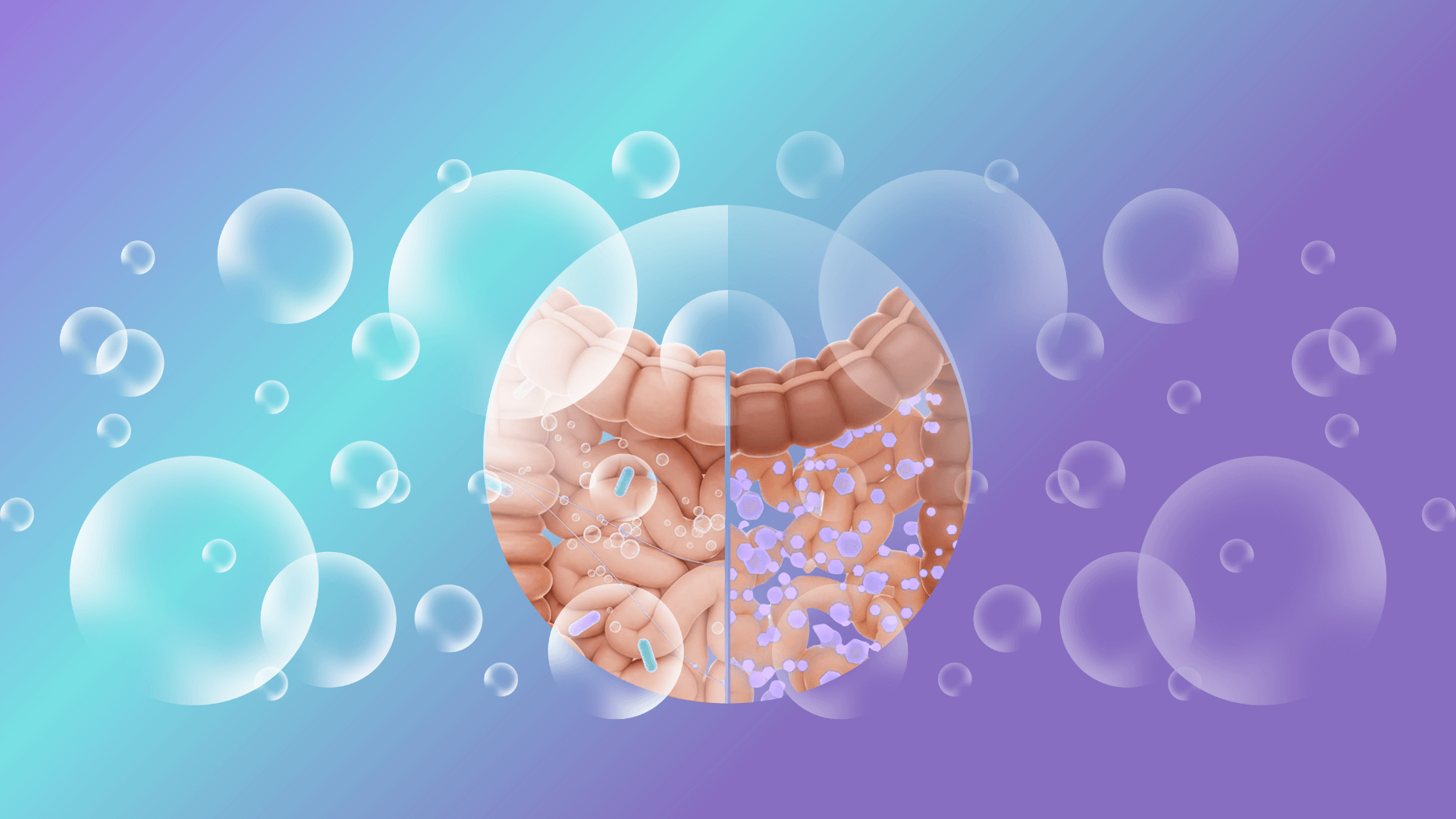
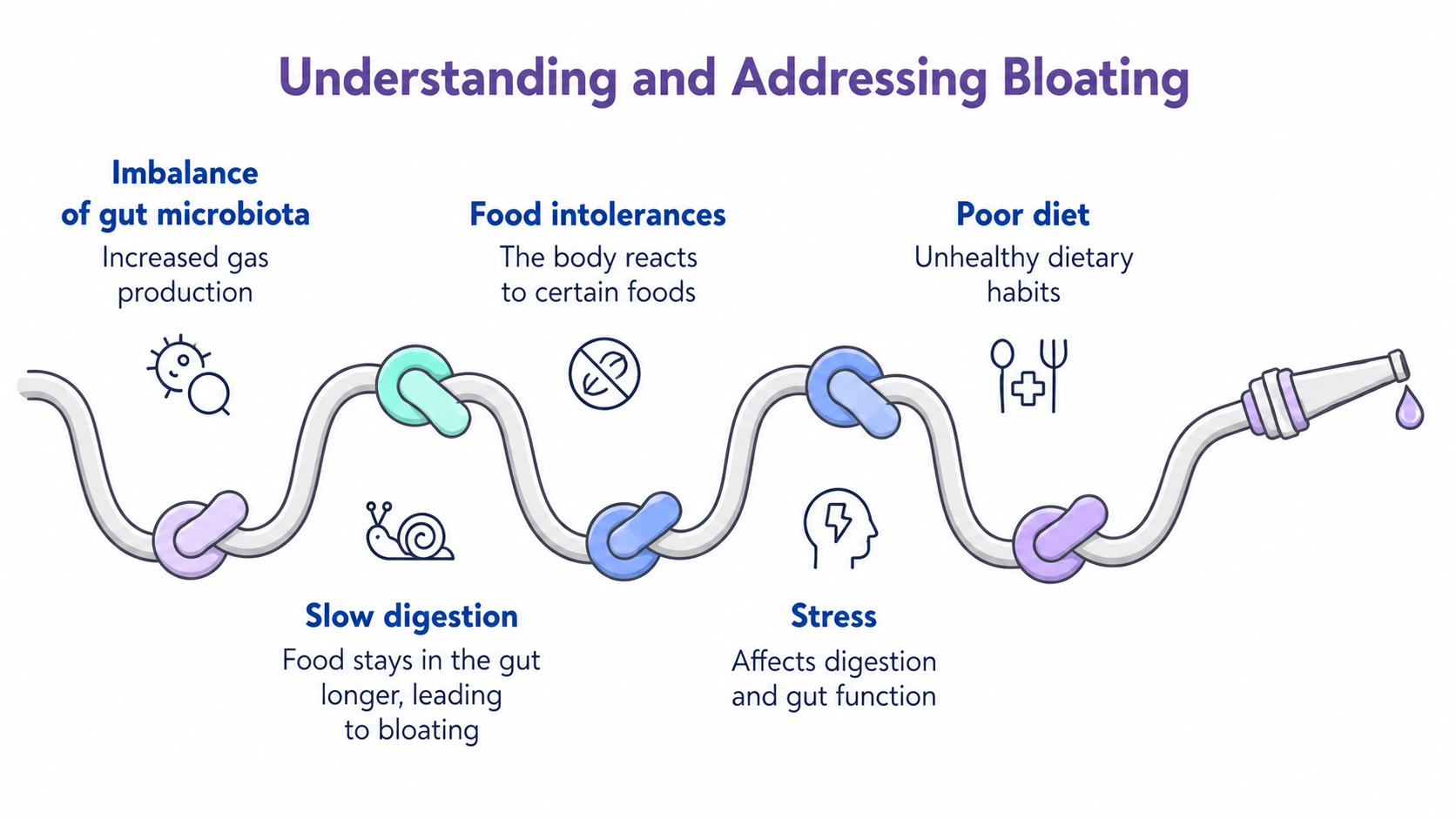
A bloated stomach is a feeling of increased pressure and fullness in the abdominal area, which is most often the result of excessive gas accumulation in the gastrointestinal tract. This condition is not just discomfort, but a signal that something in our digestive system is not functioning optimally. The causes can be complex and are often related to an imbalance in the intestinal microbiota, known as dysbiosis.
When the balance between "good" and "bad" bacteria in the gut is disrupted, the processes of food fermentation change. This leads to increased production of gases such as methane and hydrogen, which distend the intestines and cause pain and discomfort. Other factors include delayed peristalsis, food intolerances (lactose, gluten), stress and unhealthy eating habits. Effectively getting rid of a bloated belly depends on addressing these root causes.
Why is everyone talking about probiotics for bloating and gas?
The most commonly recommended solution for gut imbalances is taking a probiotic for bloating and gas. The logic behind this is clear – if there is an imbalance, let’s add more “good” bacteria to restore order. Probiotics are live microorganisms that, when taken in adequate amounts, can provide health benefits to the host.
The idea is for these new bacteria to settle in the gut, multiply, and start producing beneficial substances that can improve digestion and reduce inflammation. Despite their popularity, however, probiotics face several challenges. Their survival through the acidic environment of the stomach is not always guaranteed, and their settlement and colonization in the gut is a slow and uncertain process. It often takes time before any real effect is felt, if any at all.
What is the difference between probiotics, prebiotics, and postbiotics?
To understand which is the best solution, it’s important to clarify terminology that is often confused. Imagine the gut microbiota as a garden: probiotics are the seeds (the good bacteria), prebiotics are the fertilizer (the food for the bacteria), and postbiotics are the fruits (the beneficial substances the bacteria produce).
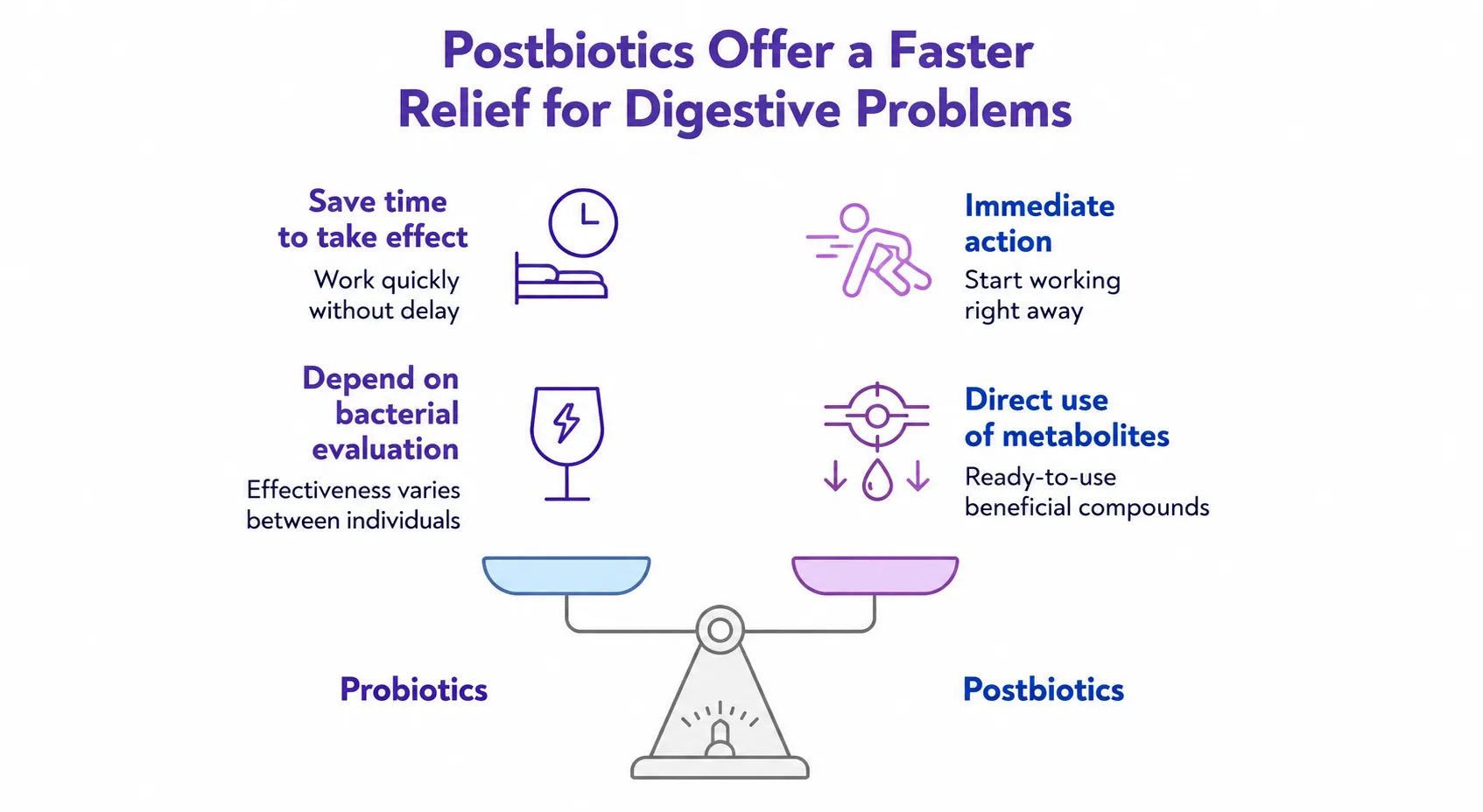
The difference between them is fundamental to their effectiveness. While probiotics require time and the right conditions to "bear fruit," postbiotics deliver these final, beneficial products directly.
To illustrate the differences, advantages and disadvantages of each type, we have prepared the following comparison table.
| Category | Description | Advantages | Disadvantages |
| Probiotics | Live beneficial bacteria (e.g. Lactobacillus, Bifidobacterium) that are taken to colonize the intestines. | They can colonize the intestinal tract and restore populations of beneficial bacteria; | They are sensitive to stomach acid and temperature; require time to act; the effect depends on the specific strain; |
| Prebiotics | Indigestible fiber (e.g. inulin, fructooligosaccharides), which serves as food for the good bacteria in the intestines. | Stimulate the growth of your own beneficial microflora; improve stool consistency; | They can cause gas and bloating at the beginning of intake, especially in people with dysbiosis; |
| Postbiotics | Bioactive compounds produced by probiotic bacteria during fermentation. They include short-chain fatty acids, enzymes, vitamins, etc. | They work immediately because they deliver beneficial metabolites directly; they are stable and not affected by stomach acid; they do not need colonization. | They are still a newer and unfamiliar concept to the general public. |
As it turns out, postbiotics skip the uncertain steps and deliver directly what our gut needs for comfort and balance.
Could a postbiotic be a more effective solution to getting rid of a bloated belly?
Yes, a postbiotic can be a much more effective solution because it addresses the problem directly and immediately. Instead of waiting for the live bacteria from the probiotic to survive, settle in, and start working, with a postbiotic we are implementing the end result of their activity – their metabolites. It’s like getting a ready-made harvest instead of planting seeds and waiting.
This direct approach brings several key benefits that are especially important for conditions such as bloating, gas, and inflammatory processes in the intestines.
How do postbiotics act directly on the problem?
Postbiotics work instantly because they contain active metabolites that regulate intestinal processes. These compounds, such as short-chain fatty acids (butyrate, acetate), serve as the main source of energy for the cells of the intestinal mucosa. When these cells are well "fed", they strengthen the barrier function of the intestine, reduce permeability ("leaky gut") and calm local inflammation. This leads to better digestion, reduced gas production and rapid relief of discomfort.
Why is the stability of postbiotics key?
One of the biggest advantages of postbiotics is their stability. Since they do not contain live microorganisms, they are not affected by factors such as stomach acid, temperature or antibiotic intake. This ensures that the full dose of active substances reaches the intestines, where they can exert their beneficial effects. With probiotics, there is always a risk that a large part of the bacteria will not survive the journey, which compromises their effect.
How do postbiotics help with irritable bowel syndrome (IBS) and other inflammation?
Postbiotic metabolites are extremely effective in regulating the immune response in the gut. In conditions such as irritable bowel syndrome (IBS) or colitis, the immune system is overactive and causes chronic inflammation. Postbiotics help to calm this inflammatory stress, reduce pain and regulate peristalsis. They strengthen the "protective wall" of the intestinal mucosa, limiting the entry of toxins into the bloodstream - a key factor in controlling these conditions.
How to choose the right product for our needs?
Choosing the right product for reducing belly fat should be based on scientific evidence and quality, not just popularity. It's important to look for a solution that addresses the root of the problem, giving your body the tools it needs to restore balance, not just temporary relief.
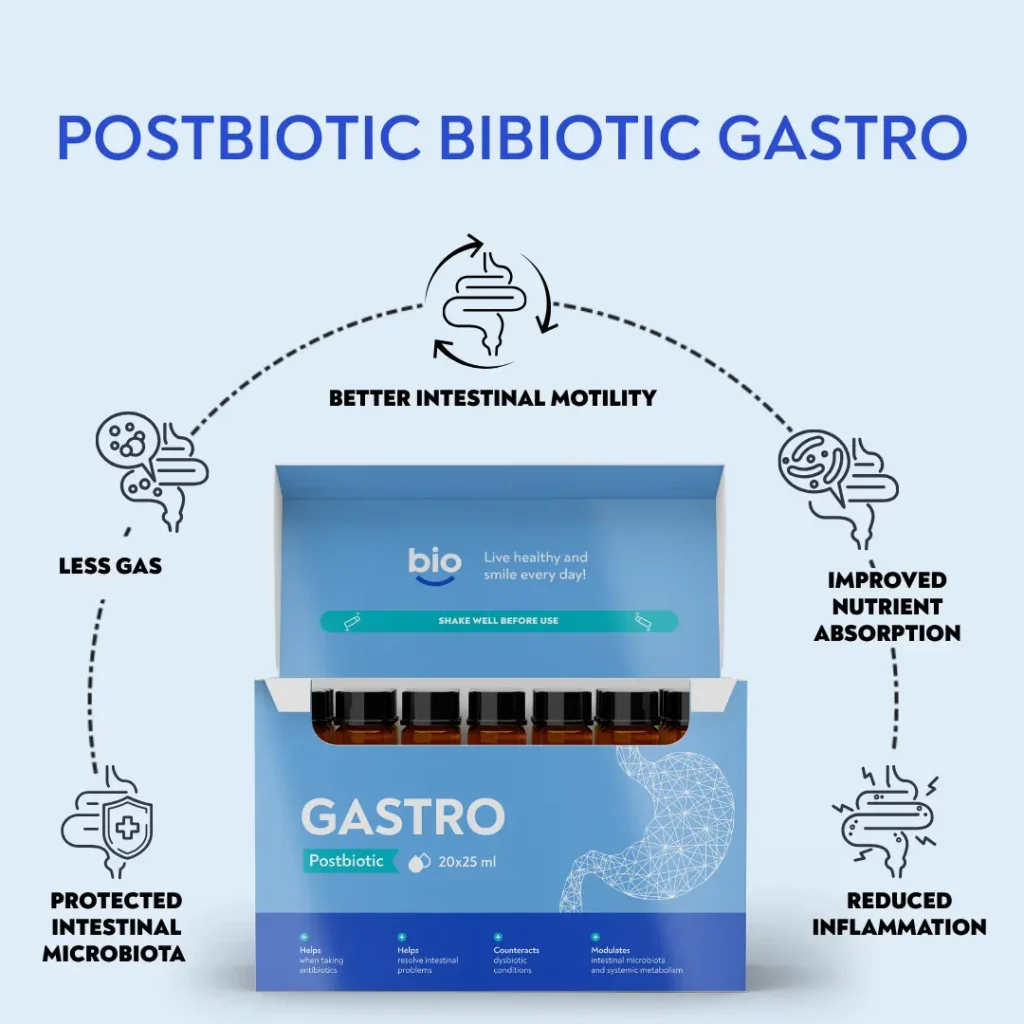
An innovative solution that harnesses the power of postbiotic science is now available on the Bulgarian market. Bibiotic® Gastro is a postbiotic developed after over 5 years of scientific work to offer targeted support for the gastrointestinal tract. It delivers 100% natural bacterial metabolites without preservatives or synthetic additives.
Here's how Bibiotic ® Gastro can help permanently reduce a bloated belly :
- Relieves swelling and improves digestion;
- Regulates peristalsis and reduces gas formation;
- Supports the gastrointestinal tract during and after antibiotic treatment;
- Restores intestinal balance in dysbiosis;
- It soothes inflammation in conditions such as IBS, colitis, and "leaky gut."
By directly delivering active metabolites, Bibiotic® Gastro supports the growth of your own beneficial bacteria and creates an environment in which digestion proceeds smoothly and without discomfort.
Fighting a bloated belly doesn't have to be an endless cycle of trial and error. Instead of just adding a probiotic for bloating and gas in the hope that it will work, you can take a more intelligent and direct approach.