



 Bestseller

Probiotic for the stomach or postbiotic? What do the latest scientific findings say

Bloating, pain, gurgling, discomfort... any one of these sensations is enough to ruin our day. When our stomach is "nervous", irritated or just plain sore, our first instinct is to look for a quick and effective solution. For millions of people around the world, this instinct leads them to the search for a " stomach probiotic " .
This is the answer we've learned from decades of advertising and health advice – "good bacteria" will come in, "colonize" the gut, and restore order.
But what if we told you that this approach is like sending an army of workers to a construction site without being sure if they will make it, if they have the tools, and if they even know what to do?
Imagine that instead, you directly deliver the "ready-made, repaired building" - all the necessary parts, tools and materials that start working immediately . This is the fundamental difference between a probiotic and a postbiotic. Recent scientific discoveries show that for quick and safe stomach relief, we need not the workers themselves, but their final product .
What are we actually looking for when we type "probiotic for stomach aches"?
When we search for "probiotics for stomach aches," we're not looking for a specific strain of bacteria, but for direct and rapid relief of symptoms. We want to stop the bloating, calm the cramps, normalize digestion, and eliminate that constant discomfort that prevents us from living normally.
The problem we are trying to solve is rarely simply a "lack of good bacteria." More often than not, the symptoms are the result of several deeper issues:
- Dysbiosis: An imbalance in which "bad" bacteria outnumber "good" bacteria.
- Inflammation: The local immune system in the intestine is overactive and "attacks" its own mucosa.
- Intestinal permeability: The "protective wall" of the intestine is compromised, allowing toxins into the bloodstream.
We are looking for a solution that addresses these three problems simultaneously. The question is, is a traditional gut probiotic the best tool for the job?
Why is a traditional stomach probiotic not always a quick fix?
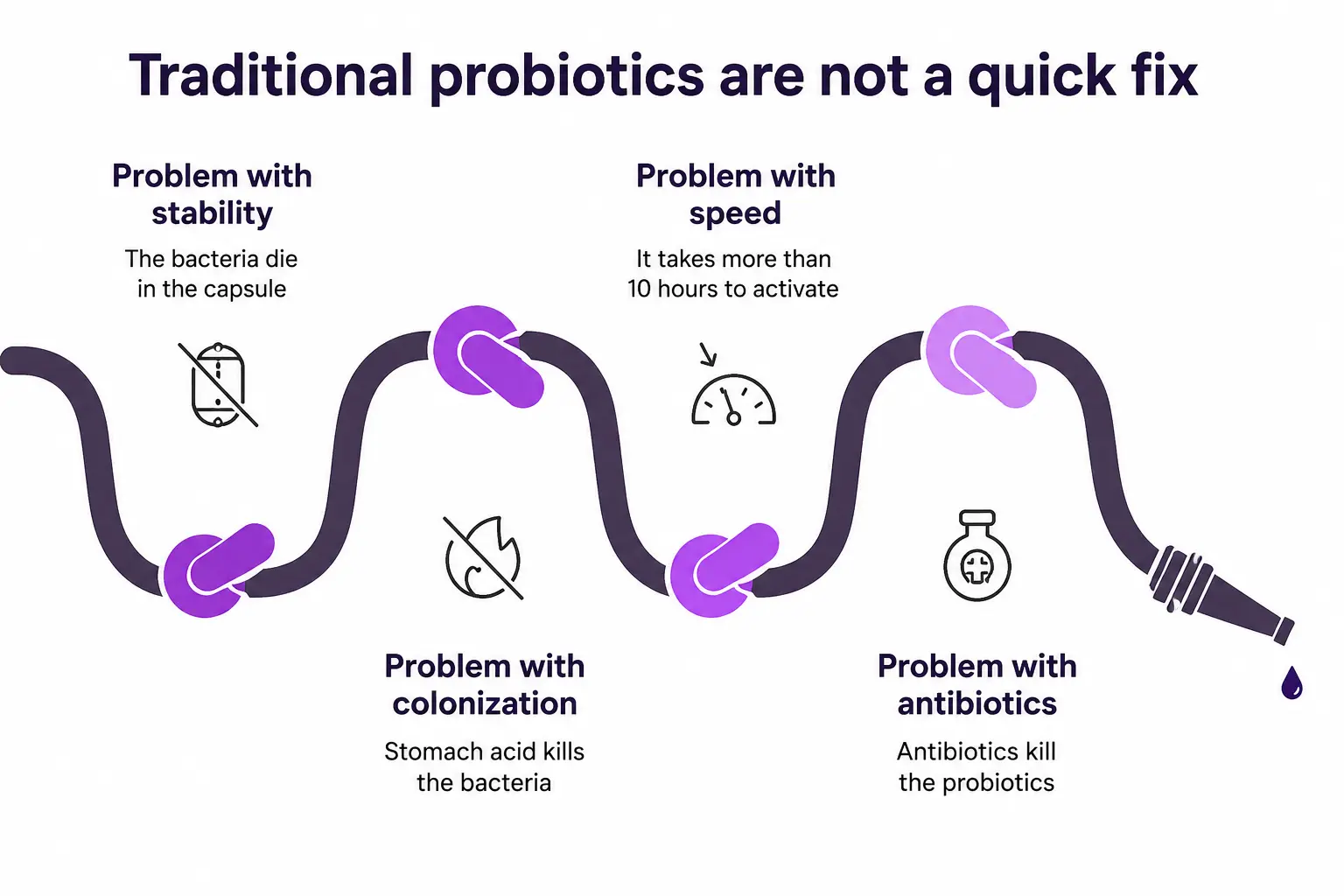
Traditional probiotics are not a quick fix because they consist of live, but extremely fragile bacteria. To be effective, they must survive the extremely acidic environment of the stomach, reach the intestines, find food (prebiotics), "wake up" and only then begin to produce beneficial substances. This process is slow (often over 10 hours) and highly uncertain.
Taking a probiotic is like playing the lottery. You hope that the billions of live cultures listed on the label haven't died in storage, haven't been destroyed by your stomach acid, and have managed to compete for space with your own, unique bacteria.
Let's look at the main challenges facing any traditional stomach probiotic .
Here are a few reasons why live bacteria may not be the optimal solution for acute discomfort.
- Stability issue: Live bacteria are sensitive to heat, moisture, and even oxygen. Many of them die in the capsule before you even open it;
- Survival problem: Stomach acid is designed to kill bacteria. Most probiotic strains fail to cross this barrier alive;
- Speed problem: Even if they survive, they need hours (over 10, according to research) to activate and start producing useful metabolites;
- The problem with antibiotics: If you are looking for a probiotic for your stomach while on antibiotics, it is almost useless. The antibiotic will kill both the "bad" bacteria and the "good" bacteria from the probiotic.
This means that when you need support the most – during pain, diarrhea, or while taking an antibiotic – the probiotic is the least effective.
What exactly is a "postbiotic" and why is science calling it the future of gut health?
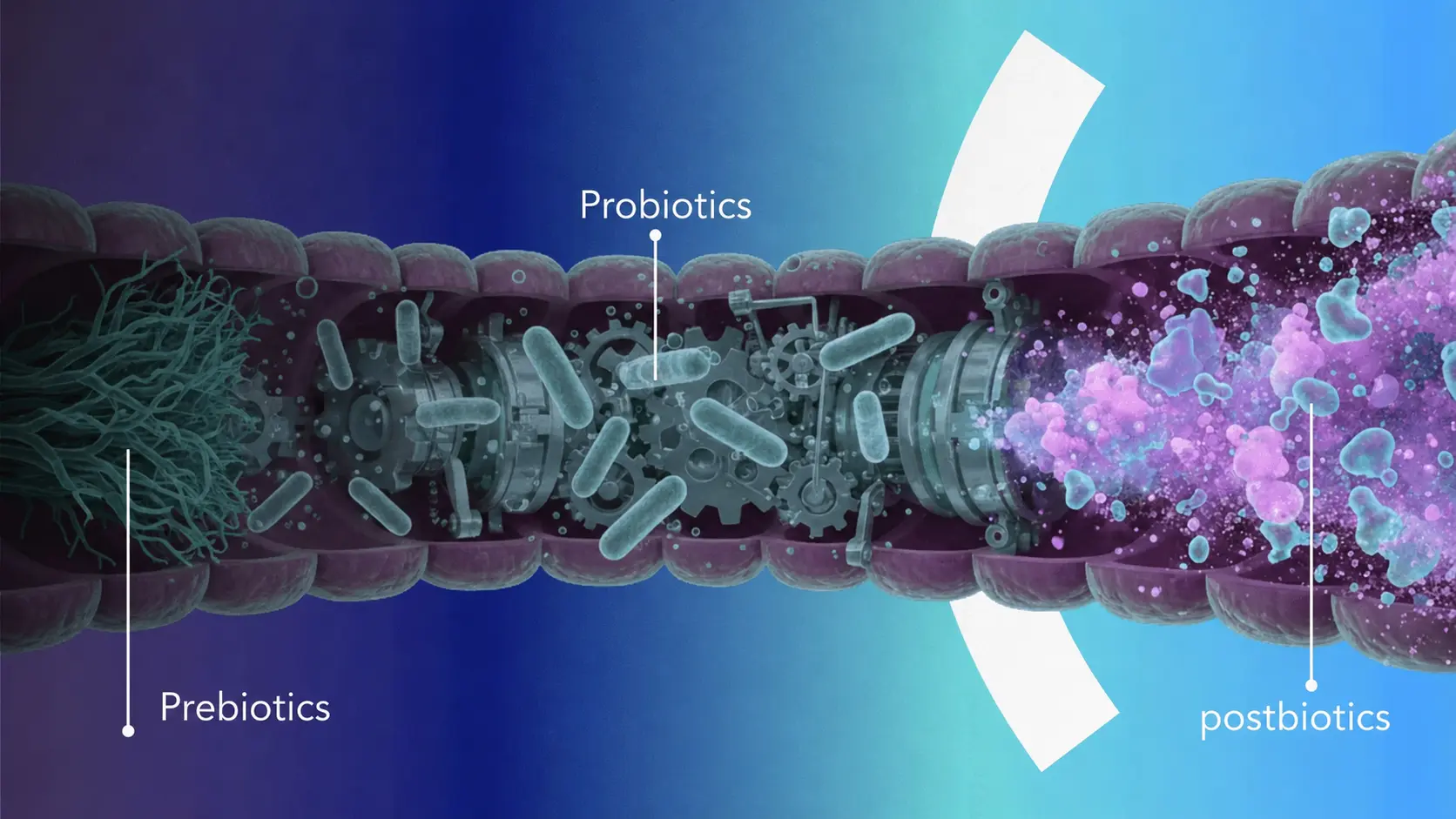
A postbiotic is the direct, ready-to-use end product of probiotic activity. Instead of the live bacteria themselves, a postbiotic contains all the beneficial substances (metabolites) that they produce: short-chain fatty acids, enzymes, peptides, and cellular components. These are non-living, extremely stable compounds that begin to act as soon as they come into contact with the intestinal mucosa.
If probiotics are the "workers," then postbiotics are the "tools," "medicines," and "bricks" for repair that these workers produce.
With postbiotics, we eliminate all the guesswork. There's no need to worry about whether the bacteria will survive, whether they'll find food, or how long it will take. We give the body directly the final, active product it needs to heal.
"Postbiotics offer the benefits of probiotics, but without the risks associated with the administration of live microorganisms. They have a direct modulatory effect on the intestinal barrier and immune response." - from authoritative scientific publications on the topic.
This is a revolutionary leap in gut health care because postbiotics are stable, safe, and have a predictable, fast-acting effect.
Probiotic for irritable bowel syndrome (IBS) or postbiotic: which works more directly?
For conditions like Irritable Bowel Syndrome (IBS), colitis, or a "nervous stomach," a postbiotic is a far more direct and effective solution. This is because it directly delivers the anti-inflammatory and barrier-repairing compounds that the intestinal lining needs right away. It doesn't try to "colonize" the gut, but directly "soothes" and "repairs" it.
People suffering from an upset stomach or a nervous stomach, know that their problem is not just indigestion. It is a condition of chronic inflammation and hypersensitivity of the nervous system in the gut.
Here, the probiotic may even make things worse temporarily, causing even more gas and bloating as it tries to “settle in.” A postbiotic, on the other hand, circumvents this problem.
Let's directly compare the two approaches to an upset stomach.
| Characteristics | Traditional Probiotic | Postbiotic (Bibiotic® Gastro) |
| Mechanism of action | Indirect: attempted colonization and future production of metabolites; | Direct: immediate delivery of ready-made metabolites for soothing and recovery; |
| Start of action | Slow (10+ hours), if it survives at all; | Fast (starts working within 1 hour); |
| Effect on inflammation | Uncertain and slow; | Direct and fast – calms the local immune response; |
| Taking antibiotics | Ineffective (the antibiotic kills it); | Completely effective and highly recommended (not affected by the antibiotic); |
| Stability and storage | Low (dies at room temperature, requires refrigeration); | Extremely high (stable at room temperature, ideal for travel). |
This comparison clearly shows why for acute and chronic problems such as IBS, colitis, or dysbiosis after antibiotics, science now firmly points to postbiotics as the smarter choice.
How does Bibiotic® Gastro meet the need for quick and safe stomach recovery?
Bibiotic® Gastro is designed to be the direct answer to all the problems that traditional stomach probiotics cannot solve. Developed after over 5 years of scientific work, it delivers 100% natural, liquid bacterial metabolites that start working for your relief immediately.
This is not just another supplement. This is a purposeful scientific innovation, honored by the Bulgarian Pharmaceutical Union as "Product of 2024" and with the "Product Innovation of 2024" award from Forbes. This is a product recommended by leading gastroenterologists such as Dr. Stefan Grancharov, precisely because of its fast and predictable mechanism of action.
When you take Bibiotic® Gastro , you don't just hope for improvement. You actively cause it.
This is how Bibiotic® Gastro directly addresses the problems of an irritated stomach.
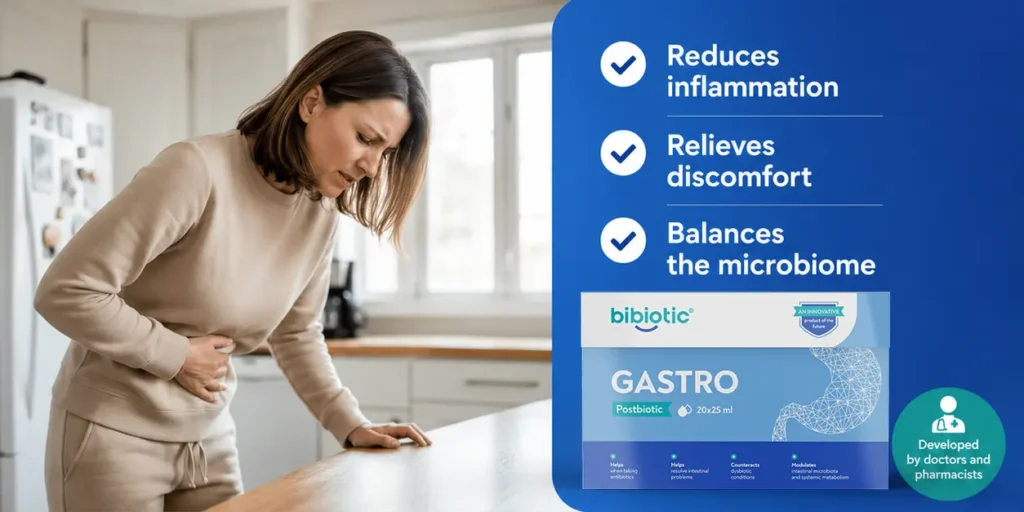
For bloating and gas: Active metabolites immediately improve food digestion and regulate peristalsis, leading to rapid relief of discomfort;
For dysbiosis (imbalance): Instead of introducing foreign bacteria, Bibiotic® Gastro "nourishes" your own beneficial bacteria, giving them the ready-made substances they need to recover and suppress the growth of harmful microorganisms;
For IBS and colitis: It directly soothes inflammation in the intestinal mucosa and strengthens its "protective wall", limiting the entry of toxins. This is key to managing chronic conditions;
During and after antibiotics: Since it does not contain live bacteria, Bibiotic® Gastro is the perfect partner for antibiotic therapy. It supplies the missing metabolites that the antibiotic destroys and protects the stomach from side effects such as diarrhea.
With Bibiotic® Gastro you get a 100% natural, liquid, easy-to-digest product, without preservatives, GMOs or synthetic substances.
Don't rely on the principle: "It will go away on its own!". Take care of your health with the most modern solution that science offers. Discover the power of the first Bulgarian postbiotic and restore the comfort of your stomach.
Frequently Asked Questions (FAQ)
1. Can I take Bibiotic® Gastro together with an antibiotic?
2. How quickly does a postbiotic work compared to a probiotic for stomach pain?
3. Does Bibiotic® Gastro help with irritable bowel syndrome (IBS)?
4. Should I store Bibiotic® Gastro in the refrigerator?
Scientific sources and publications
For additional information on the effectiveness of postbiotics:
- Postbiotics as a Novel Strategy for Modulating the Gut Microbiome:
- Published in Nature Reviews Gastroenterology & Hepatology , it examines how non-living microbial metabolites (postbiotics) directly impact host health, immune modulation, and the intestinal barrier.
- https://www.nature.com/articles/s41575-021-00519-8
- The Concept of "Postbiotics" in Gastroenterology:
- A study in Frontiers in Microbiology defines postbiotics and describes their advantages over probiotics, including their safety, stability, and direct effects on gastroenterological disorders.
- https://www.frontiersin.org/articles/10.3389/fmicb.2019.01008/full
- Role of Short-Chain Fatty Acids (SCFAs) in Gut Health and Disease:
- PubMed Central (PMC) publication . Explains the role of short-chain fatty acids (a key component of postbiotics) in nourishing the intestinal mucosa, reducing inflammation, and maintaining the integrity of the intestinal barrier.
- https://www.ncbi.nlm.nih.gov/pmc/articles/PMC7917201/