



 Bestseller

The best probiotic for stomach and intestines: Why does the future belong to postbiotics?

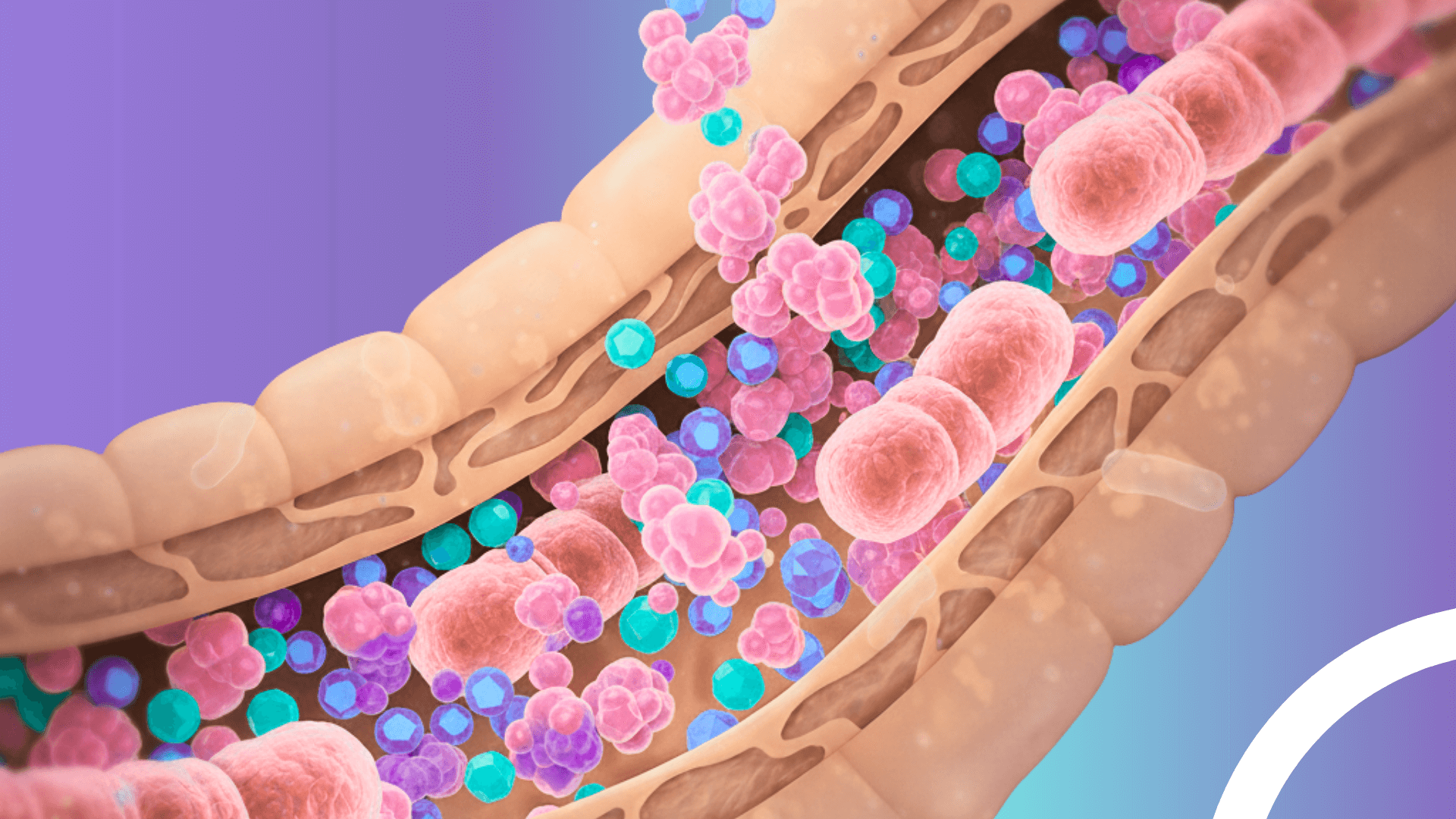
For a long time, the search for the best probiotic for your colon and stomach has focused on live bacteria. But what if we told you that the revolution in gut health care is already here, and it’s called postbiotics ? This isn’t just another probiotic for your stomach and intestines; it’s the next generation of microbiome support that solves the fundamental problems of traditional probiotics.
Imagine that familiar discomfort – bloating, irregularity, gurgling. You’ve tried it all, including various “live” cultures. For decades, we’ve been taught that the answer lies in taking billions of live bacteria. And yet, many people remain disappointed. Why? Because the effectiveness of a traditional probiotic is extremely fragile. It depends on too many “ifs” – if the bacteria survive manufacturing, if they survive storage, and if they survive the acidic environment of the stomach.
This is where scientific innovation comes in. Today, we understand that it's not the live bacteria themselves that are most important, but what they produce. These beneficial substances are the key to health. And now we can get them directly.
What exactly are probiotics and why are they no longer enough?
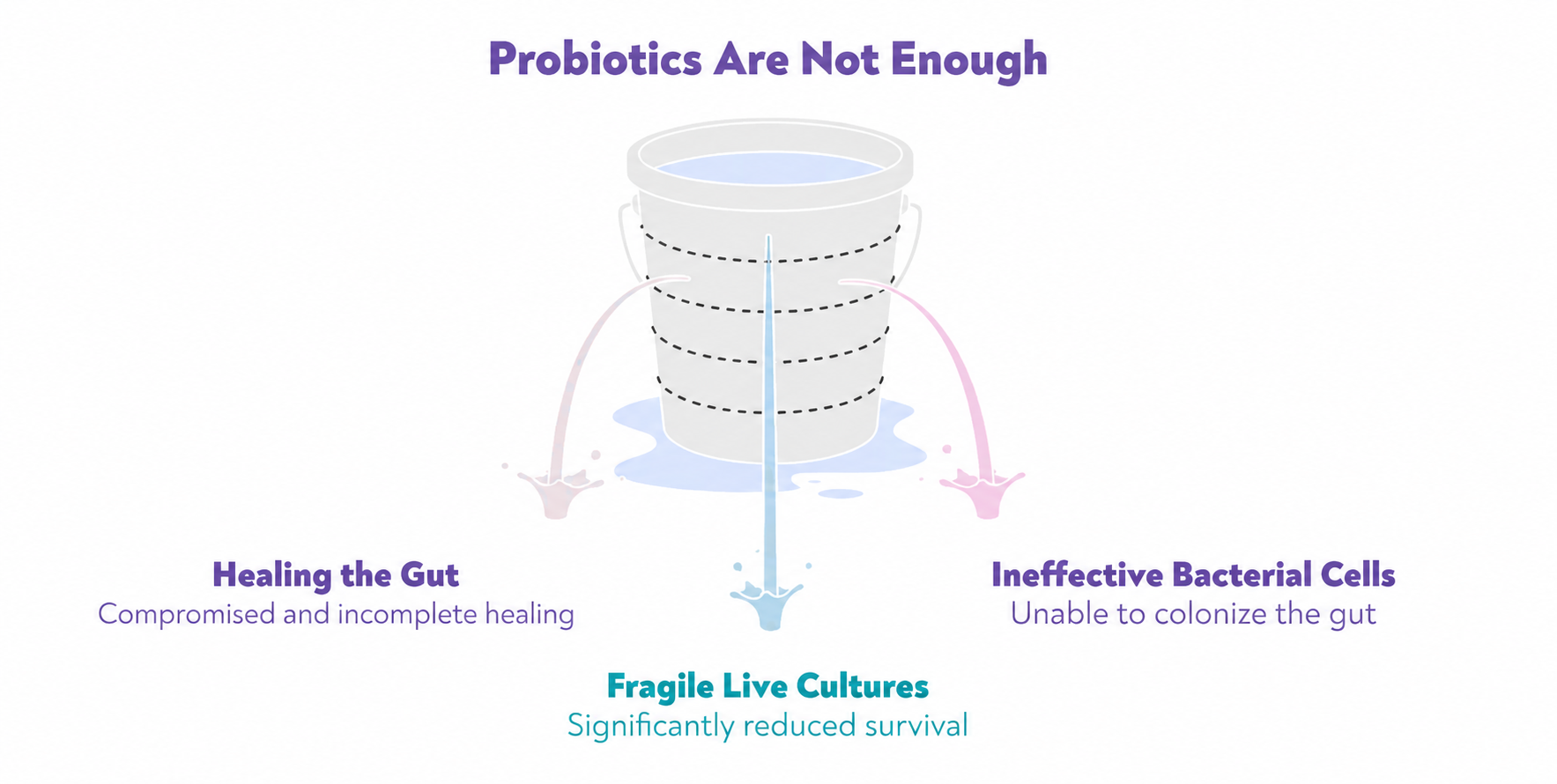
Probiotics, by definition, are live microorganisms that, when taken in adequate amounts, confer a health benefit on the host. The problem is that their effectiveness depends entirely on their survival on the journey to the gut, which is often compromised and highly uncertain. These live cultures are delicate. Even if a product leaves the factory with 10 billion live bacteria, by the time it reaches you and passes through your stomach acid, the number may have drastically decreased. Many of the standard probiotics on the market are essentially "dead on arrival." You pay for live cultures, but you get ineffective bacterial cells that can't colonize your gut or produce the nutrients you need.
What is a postbiotic and how does it solve the problems of probiotics?
Postbiotics are the innovative answer to the shortcomings of probiotics . In short, postbiotics are non-living (inactivated) bacteria and their metabolic products that directly provide health benefits. Instead of hoping that the living bacteria will survive and eventually produce beneficial compounds, a postbiotic gives you those compounds directly.
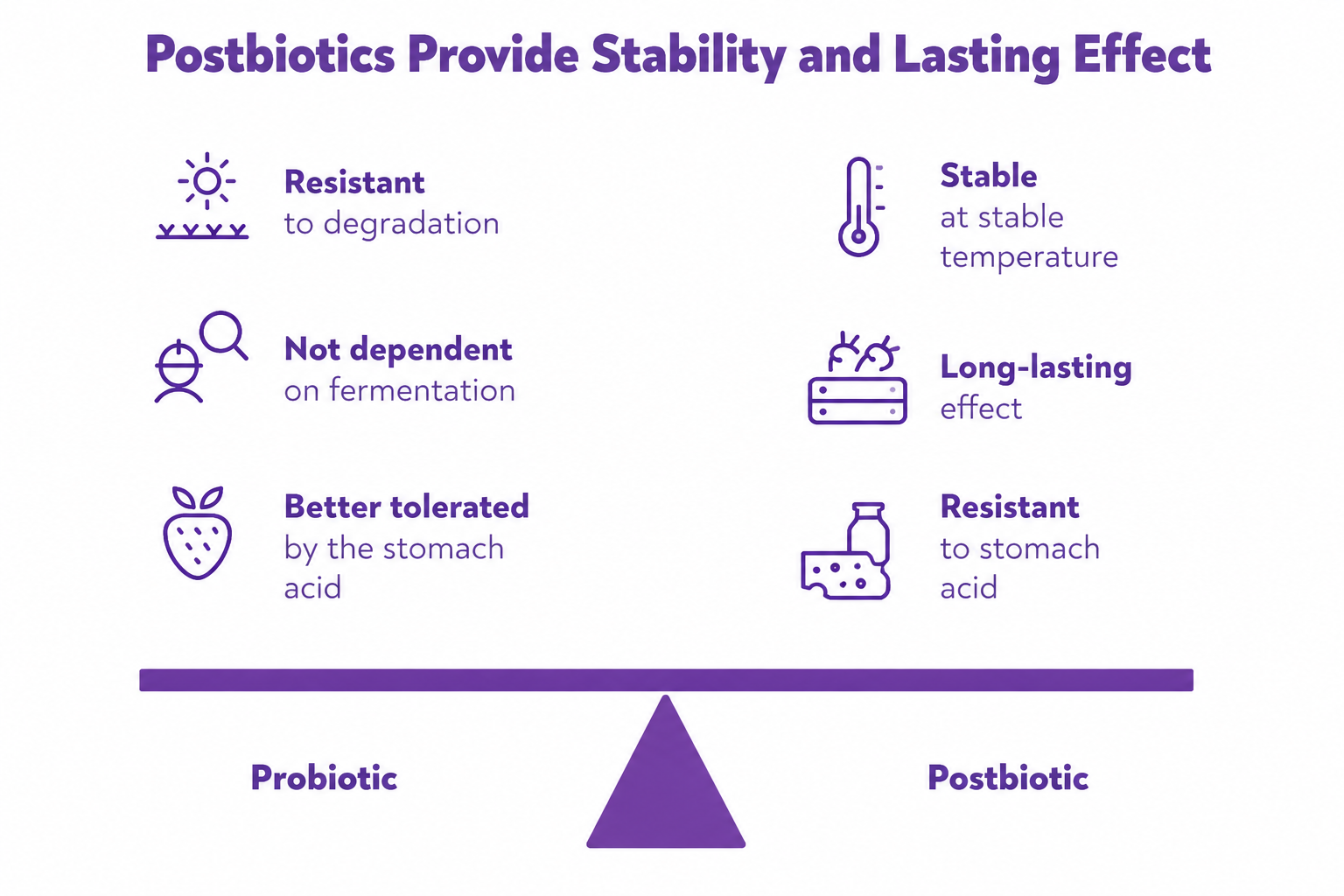
These are the metabolites – short-chain fatty acids, enzymes, peptides and cell wall components – that live bacteria produce during fermentation. These substances are the “workhorse” of the microbiome. The inactivation process stabilizes the bacteria. They are no longer “alive”, but they are 100% metabolically active and structurally sound. Imagine that instead of planting a seed (a probiotic), you are directly receiving the ripe, juicy fruit (a postbiotic). They are stable at room temperature, unaffected by stomach acid and start working as soon as they reach the gut.
Why is the “best probiotic for the colon” actually a postbiotic?
The title of best probiotic for the colon now belongs to postbiotics because they work smarter and more directly. Postbiotics provide direct "fuel" to the cells of the colon (colonocytes), bypassing the need for live bacteria to survive the long journey there entirely.
The main food for colon cells is butyrate , a short-chain fatty acid. It is one of the main metabolites found in postbiotics. When you take a postbiotic, you are directly nourishing your intestinal lining. This has several immediate effects: First, it strengthens the intestinal barrier, fighting the so-called "leaky gut". Second, it modulates the local immune response, reducing inflammation. And third, it creates an ideal environment for your own, unique good bacteria to thrive. Instead of introducing foreign strains, you are supporting your own army.
What are the advantages of a postbiotic over a standard probiotic for the stomach and intestines?
The main advantages of postbiotics are their exceptional stability , faster onset of action , and significantly better tolerability . They eliminate uncertainty from the equation. Since they are not alive, they do not require special refrigeration and carry no risk of small intestinal bacterial overgrowth (SIBO).
| Characteristics | Traditional Probiotic | Postbiotic (e.g. Bibiotic Gastro) |
| Condition | Live bacteria | Non-living metabolites ( inactivated ) |
| Stability | Low (sensitive to acid, temperature, moisture) | Very high (stable under all conditions) |
| Storage Need | Often require refrigeration to remain viable | No, room temperature is perfectly sufficient. |
| Start of action | Delayed (need to survive, establish and colonize) | Immediate (direct action of active metabolites) |
| Risk (e.g. in SIBO) | Potential risk of worsening overgrowth | Zero risk as they are not alive and do not reproduce |
| Compatibility with antibiotics | They must be taken one hour apart, the antibiotic kills them | Full compatibility, can be accepted at any time |
As the comparison shows, postbiotics eliminate uncertainty and provide reliable, consistent support.
How to choose the right postbiotic for our intestines?
Choosing the right postbiotic for your gut depends on the proven inactivation technology and the ingredients included in the composition.
Here's what to look for:
- Inactivated strains: This is the guarantee that the bacteria are non-living but metabolically active and their cell walls are intact so they can communicate with your immune system.
- Proven strains: Look for a combination of proven strains from the genera Lactobacillus (such as L. acidophilus, L. casei ) and Bifidobacterium that have undergone an inactivation process.
- Clean ingredients: Make sure the product doesn't contain unnecessary fillers, allergens, or artificial colors.
How does Bibiotic Gastro meet these new standards?
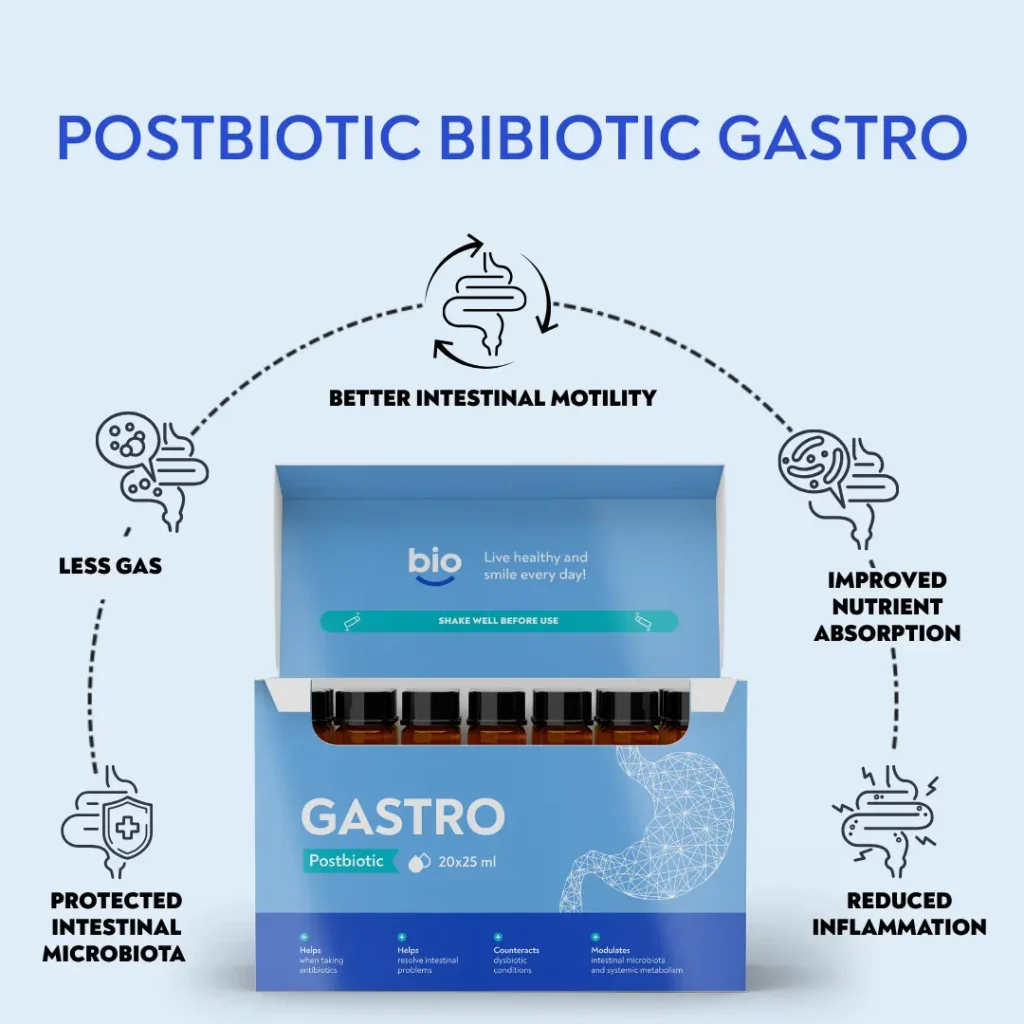
Bibiotic Gastro was created precisely on these principles to meet the needs of the modern consumer who seeks reliable results. It combines inactivated (postbiotic) strains , positioning itself as a complete, intelligent solution for intestinal balance.
Postbiotic Bibiotic® Gastro
Restores and maintains the intestinal microbiota – supports beneficial bacteria during and after antibiotic therapy and restores balance in dysbiosis.
Relieves gastrointestinal discomfort – reduces bloating, gas, abdominal pain and improves digestion.
Strengthens immune defense and soothes inflammation – regulates local immune response, reduces intestinal inflammatory stress and strengthens the protective barrier of the intestine.
Its formula is precisely crafted to deliver what it promises.
Inactivated strains ( L. Acidophilus, L. Casei, L. Rhamnosus and Bifidobacterium ) are stable, potent and ready to act immediately. They do not need to be colonized – they directly nourish the intestinal mucosa and balance the immune response. What’s more, some of the metabolites that the postbiotic delivers are also nutrients for your own good bacteria.
Imagine the relief of knowing that the contents of each vial work for you right away, without worrying about whether it survived transportation or your stomach. Bibiotic Gastro eliminates the guesswork.
Conclusion
The search for the best probiotic for your colon is over because the category has evolved. It's no longer enough to simply take live bacteria and hope for the best. Science has given us a smarter, more robust, and more effective tool: the postbiotic .
Postbiotics deliver the active compounds your gut needs directly, eliminating the stability and survival issues that plague traditional probiotics. They offer immediate action, better tolerability, and reliable results.
Choose the smart solution offered by Bibiotic Gastro , and finally get the balance and comfort you deserve.
Frequently Asked Questions (FAQ)
1. How quickly does the postbiotic work?
2. Can I take a postbiotic if I have SIBO?
3. What is the difference between a prebiotic, a probiotic, and a postbiotic?
Prebiotic: This is the "cake" or food (e.g. fiber) for the good bacteria.
Probiotic: These are the "seeds" (live bacteria) that you plant in the garden.
Postbiotic: These are the "fruits" (the beneficial substances that bacteria produce) that you harvest from the garden.
4. Should I store Bibiotic Gastro in the refrigerator?
Scientific sources and references:
Note: The articles below serve as a scientific basis for the concepts discussed in the article, specifically the definition and benefits of postbiotics and the role of metabolites like butyrate.
Aguilar-Toalá, JE, et al. (2018). "Postbiotics: An evolving term within the functional foods field".
- Link: https://doi.org/10.1016/j.tifs.2018.03.009
- This is a link to the article in the journal Trends in Food Science & Technology via the ScienceDirect platform.
Wegh, CAM, et al. (2019). "Postbiotics and Their Potential Applications in Early Life Nutrition".
- Link (Full free access): https://pmc.ncbi.nlm.nih.gov/articles/PMC6801921/
This is a link to the full text of the article in PubMed Central (PMC) , which is a free digital library of the US National Institutes of Health.