



 Bestseller

Postbiotic – recognition from the International Scientific Association for Probiotics and Prebiotics

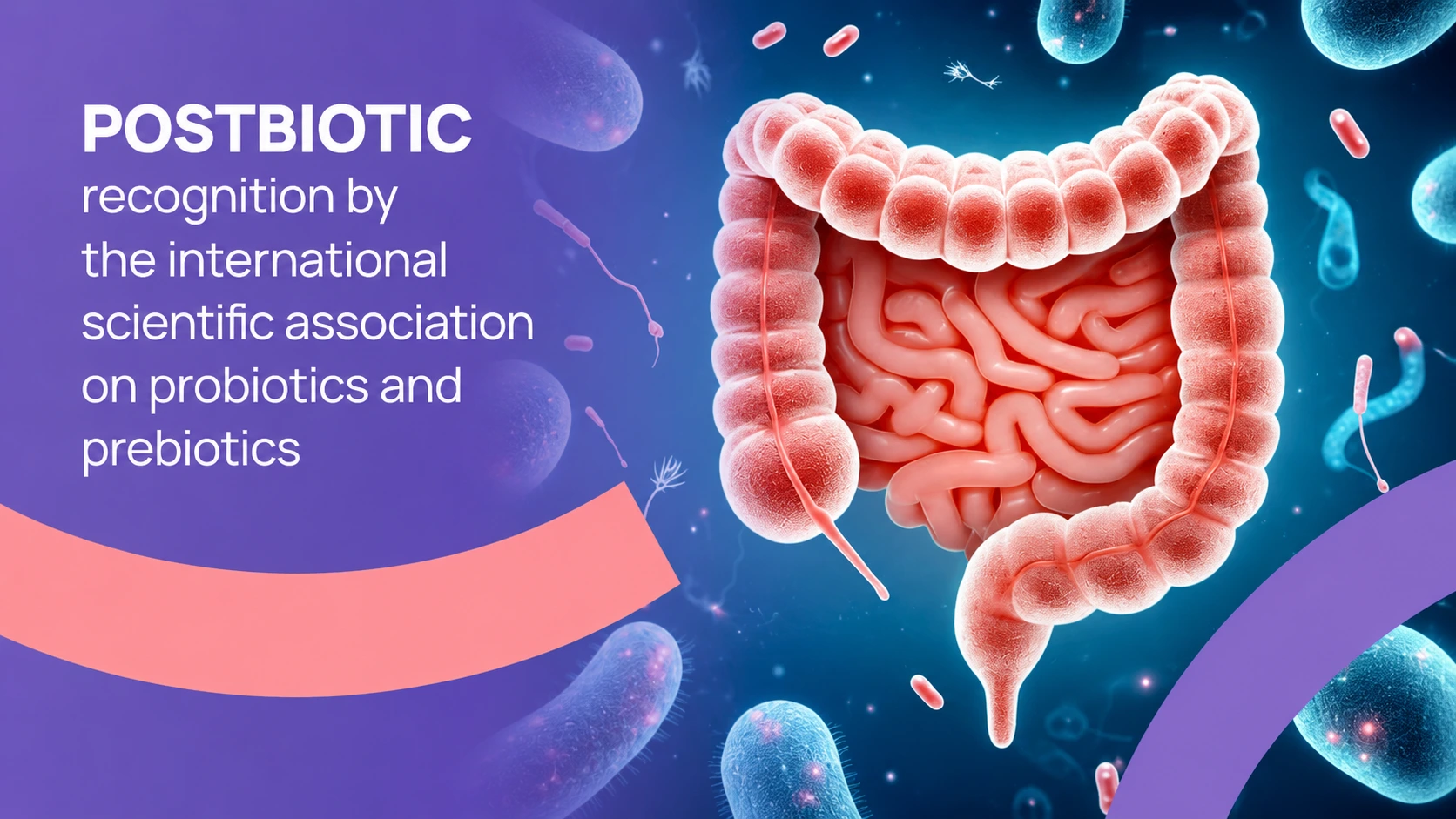
Today, scientists and doctors point to postbiotics as the most modern, effective and safe way to prevent and restore the intestinal microbiota , as well as to correct intestinal dysbiosis .
There is no longer any doubt in scientific circles that the era of probiotics , when used in microbiota therapy for the prevention of intestinal microbiota and correction of intestinal dysbiosis, has come to an end. The same applies to prebiotics, when used for the correction of intestinal dysbiosis.
It took almost 50 years after the probiotic revolution for modern technologies, such as sequencing , to develop, helping the scientific and medical community to conclude that the human microbiota is strictly individual and unique to each individual, like fingerprints. Each of us has our own, time-developed composition of microorganisms, which can be called a microbial identity card.
The past few decades have clearly demonstrated the importance of the human microbiota, both for short-term and long-term human health. Early programming of the microbiota and immune system during pregnancy, birth, lactation, and weaning is important and determines adult immune function, the microbiome, and overall health. We have also witnessed a rapid increase in the number of products that claim to influence the function and composition of the microbiota in various parts of the body to benefit human health.
Improving human health by modulating microbial interactions across all phases of life is an evolving concept that is increasingly important to consumers, food manufacturers, health professionals, and regulators. Consensus definitions for probiotics, prebiotics, and synbiotics have been published for a long time. The concept of postbiotics is new, but related to this group of terms, and is emerging as an important microbial-derived tool for promoting health.
Postbiotics are quickly and confidently entering our daily lives. In scientific circles, they are increasingly being cited as one of the most effective and safe preparations for correcting the intestinal microbiota. Today, there is no longer any doubt about their advantages over probiotics and prebiotics.
But it is increasingly common for some manufacturers to misuse and call products postbiotics that do not meet the conditions for such. In other cases, in their effort to offer the cheapest possible postbiotics to the market, manufacturers make many compromises in terms of their composition and quality. This compromises the truly unique properties of the product.
This article aims to clarify the term "postbiotic", its definition, and the differences between the possible existing species.

Several different terms, all defined differently, have been used over the years to refer to some form of inactivated or killed microorganisms: paraprobiotics, postbiotics, parapsychobiotics, ghost probiotics, metabiotics, tyndallized probiotics, and bacterial lysates. But in the last decade, postbiotic has been used most frequently.
In 2019, the International Scientific Association for Probiotics and Prebiotics (ISAPP) convened a panel of experts specializing in nutrition, microbial physiology, gastroenterology, pediatrics, food science, and microbiology to review the definition and scope of postbiotics. The association believes that there would be benefit in unifying around the use of a single, well-defined, and understandable term, rather than using different terms for similar concepts.
In mid-2021, the ISAPP Consensus Statement on the Definition and Scope of Postbiotics selected the term postbiotic, as a combination of the term “biotic,” defined as “relating to or resulting from living organisms,” and the term “post,” a prefix meaning “after.” Together, these two terms define the meaning of the term postbiotic as “after life,” i.e. nonliving organisms.
In the same statement, a definition of a postbiotic was also defined, stating that a postbiotic is: “a preparation of non-living microorganisms and/or their components that confers a health benefit to the host.” Postbiotics must contain intentionally inactivated microbial cells, with or without their metabolites or cellular components. Purified microbial metabolites are not postbiotics. Implicit in the definition of a postbiotic is the requirement that the postbiotic be safe for its intended use. Finally, the postbiotic must be derived from a well-characterized microorganism or combination of microorganisms and prepared using a well-defined biomass production and inactivation process that can be reliably reproduced.
This definition is intended to provide a basis for clarity and accuracy in communications about postbiotics among scientists, industry, regulators, and consumers. Responsible use of the term “postbiotic” on product labels should compel manufacturers to meet the minimum criteria imposed by this definition.
Therefore, the term postbiotic refers to preparations containing, on the one hand, necessarily non-living, (intentionally killed, inactivated) whole microbial cells, also called "lysates" and/or their components (structural fragments), such as cell walls, cell particles and cellular biologically active substances, and on the other hand, but not necessarily, they may also contain naturally secreted, fermented and synthesized by these microbial cells, but not purified metabolites. That is, the postbiotic does not contain living microorganisms, but only their lysates and/or fragments of these lysates, with or without the metabolites produced by these microorganisms during their population while they were alive.
It should be noted that only microbial metabolites obtained during the cultivation and/or fermentation of certain cultures, in the absence of the inactivated cell biomass of these cultures, are not considered postbiotics. Furthermore, purified metabolites are also not considered postbiotics. Such purified molecules should instead be named using existing clear chemical nomenclature, such as butyrate or lactate. Significantly purified components and products, such as proteins, peptides, exopolysaccharides, short-chain fatty acids (SCFA), cell-free filtrates, and chemically synthesized compounds, do not qualify as postbiotics per se, although they may be present in postbiotic preparations.
From the above it follows that postbiotics can be monospecies and multispecies. Monospecies are produced by one species of microorganisms, and multispecies - by two or more. Monospecies pursue a targeted action, and multispecies - by a broad spectrum. The more species of microorganisms a postbiotic is produced from, the broader its application. And accordingly - the fewer species it is produced from, the more targeted its application. In prophylaxis, multispecies are preferable.
In addition, mono- and multi-species postbiotics , depending on their content, can be conditionally divided into four types. Postbiotics containing: 1. Components of lysates; 2. Lysates and their components; 3. Components and metabolites of lysates and 4. Lysates, their components and metabolites. As a rule, the more components a postbiotic contains, the more effective it is, but the more complex it is to produce and, accordingly, the more expensive.
Postbiotics can be powdered or liquid. Powders can be tableted and encapsulated. Liquids are preferable, since some of the bioactive substances are lost during drying. In addition, liquids are better distributed on surfaces and communicate more easily with the body.
An important factor in postbiotics is their inherent stability, both during industrial processes and during storage. Maintaining stability of live microorganisms is a technological challenge, as many probiotic organisms are sensitive to oxygen and heat, but long shelf-life products can be easily achieved for non-live microorganisms.
Postbiotics have a better safety profile than probiotics because the microorganisms they contain have lost their ability to replicate and therefore cannot cause bacteremia or fungemia, risks that are associated with the administration of probiotics.
Metabolites in postbiotics contain a variety of biomolecules that mediate different health effects in the target host. The ability of these molecules to exert a health effect can be driven by many different mechanisms. Such mechanisms can act alone or in combination. Since postbiotics are inanimate, these bioactive molecules must be secreted, fermented, and synthesized by living microorganisms before they are inactivated, and in sufficient quantities to elicit a beneficial effect. Here, ISAPP examines the possible mechanisms that could drive postbiotic efficacy. In general, five main modes of action are considered, as shown in Fig. 1 .
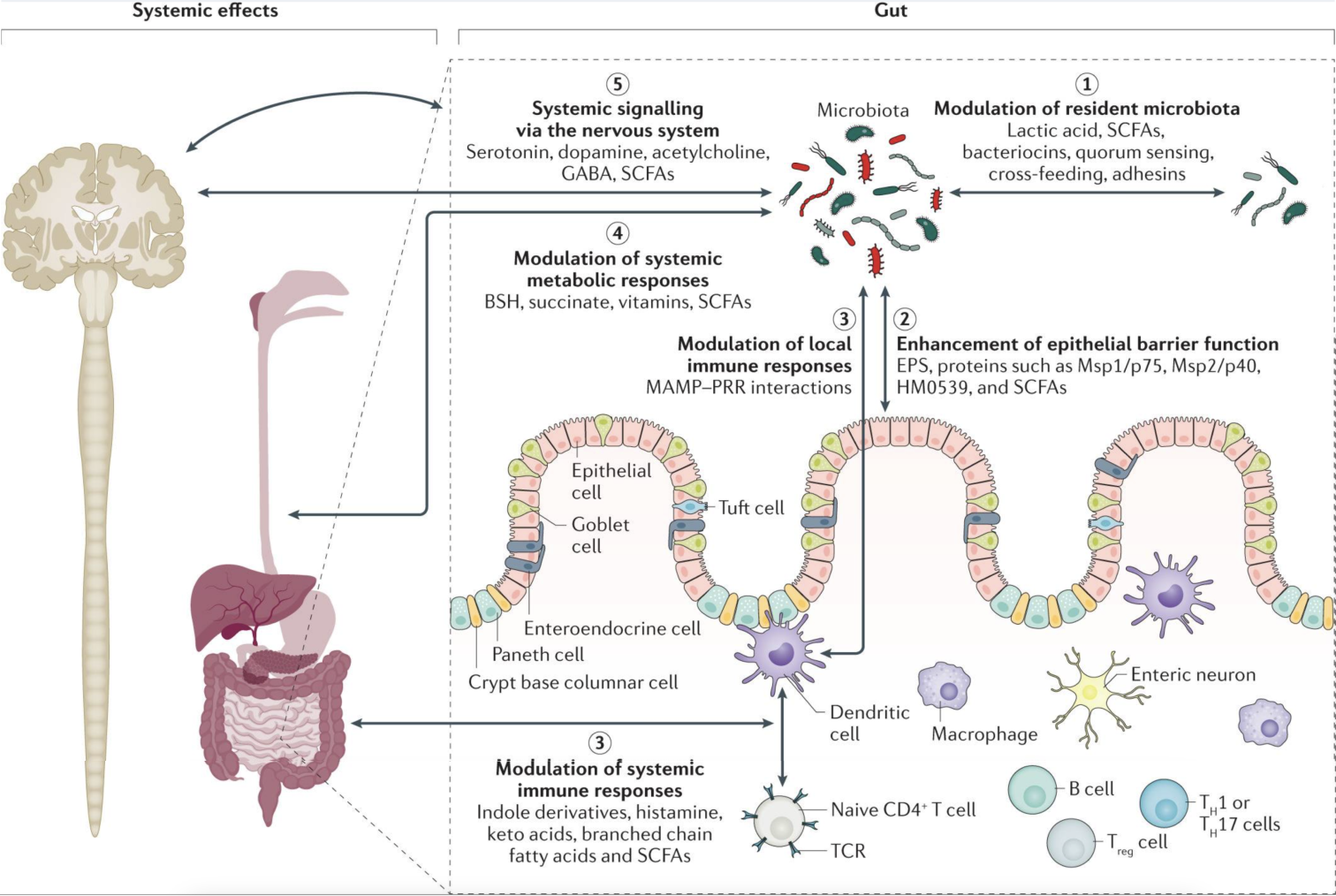
Fig. 1 Postulated mechanisms of postbiotics and exemplary effector molecules used by them
Five mechanisms of action of postbiotics are postulated:
(1) modulation of the resident microbiota;
(2) improving epithelial barrier functions;
(3) modulation of local and systemic immune responses;
(4) modulation of systemic metabolic reactions
(5) systemic signaling via the nervous system. Some examples of microbial effector molecules mediating these mechanisms are shown (non-exhaustive list).
That is, ISAPP unconditionally confirms that effective postbiotics modulate the resident microbiota and systemic metabolic reactions, as well as local and systemic immune responses, improve epithelial barrier functions and systematically interact with the nervous system in our body. This is an undeniable recognition by the international scientific community for the unique properties of postbiotics.