



 Bestseller

Probiotic therapy – myth or reality. Postbiotic revolution

There is probably no one who has not heard that “all health problems come from the gut”. Everywhere we talk about the human microbiome and its importance for our health. We have all heard about the human intestinal microbiota and the billions of microorganisms that inhabit it, with which we are inextricably linked and on which our health and well-being depend. And even more so, we have heard about probiotics.
In recent years, a huge variety of probiotics and probiotic-containing products have literally flooded pharmacies and stores. As more and more people look for natural and non-drug ways to maintain their health, manufacturers have responded by offering probiotics in everything possible and impossible: from dairy products and chocolate bars, to foods and drinks, to powders and tablets. There are currently so many probiotic products that they are able to overwhelm even the most conscientious buyers. In some ways, the industry has developed so quickly that now no one can say which probiotics are useful and which are just a waste of money. They are constantly advertised in the media and social networks as a panacea for our intestinal microbiota and all intestinal problems.
At the same time, the question of the effectiveness of probiotics and probiotic therapy is increasingly being discussed in scientific circles. And the more it is discussed, the more the myth of the benefits of probiotic therapy is debunked. Summarizing modern scientific concepts, the answer to this question is as complex and intricate as it is logical and simple.
HOW SHOULD A PROBIOTICS WORK?
So. What is the purpose of taking a probiotic? To help balance the intestinal microbiota and the well-being of the body. How? As the probiotic microorganisms contained in the probiotic in sufficient quantities, getting into our intestinal tract, begin to actively divide (reproduce), carrying out their beneficial activity in it. What? They secrete biologically active substances and substances called metabolites. Why? They secrete (separate) enzymes with which they break down complex nutrients that are not broken down by our enzymes into simple substances so that they can absorb and use them. Some of them use directly for their development, and others metabolize (process) and synthesize (produce) various metabolic compounds. Some of the synthesized metabolites are necessary for their development and reproduction, and the rest are secreted into the environment. Some - to create a suitable environment for their population. The second - to create an antibacterial environment to protect their population from other bacteria. Third – to communicate with each other and with the macroorganism. Others – to create a favorable environment and provide nutrients to their symbiotic fellows from the resident microbiota. And the rest, which are waste metabolic products for microorganisms, but extremely valuable for the host bioactive substances, are provided to the organism as a reward for the shelter, food and warmth provided to them. This is how all microbial communities work.
Or in short. Getting into the intestines, probiotic microorganisms must actively begin to multiply and produce metabolites that ensure both their well-being and the well-being of the macroorganism. And the more they get into the intestines and the more actively they multiply, the more metabolites they will secrete and the faster and more effective their action will be.
At first glance, everything seems simple and logical. But how is it in reality?

INFLUENCE OF STORAGE TEMPERATURE ON THE QUALITY OF PROBIOTICS
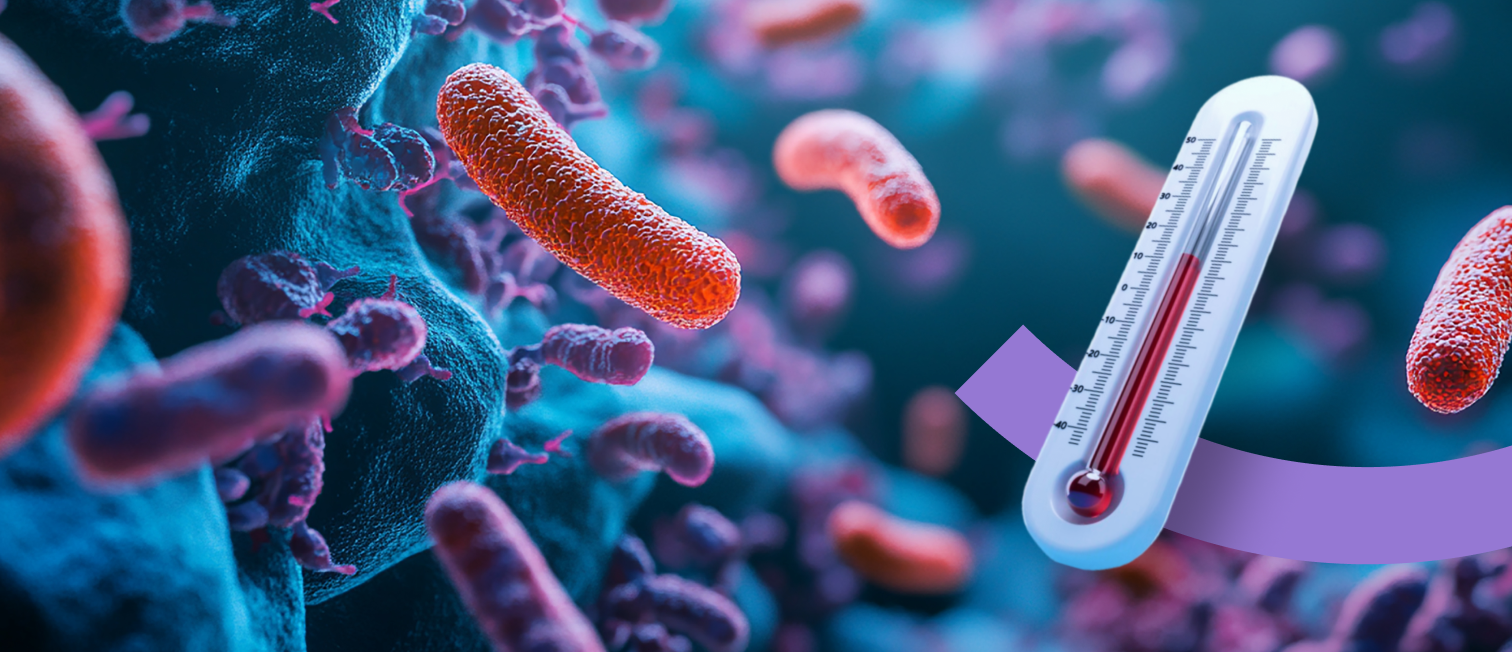
The lower the storage temperature of probiotics, the longer the microorganisms in them will be viable. The ideal regime is below minus 86 °C, very good – below minus 18 °C, good – from 2 to 6 °C, not recommended – from 20 to 30 °C and detrimental – above 40 °C.
Over 98% of all probiotics are dried, encapsulated, tableted or packaged in sachets, stored at room temperature and in most cases have a shelf life of two years. In dried form, probiotics can be stored at room temperature for longer periods.
But. Storing dry probiotics at room temperature for a long time causes temperature stress on the probiotic cultures in them. Over time, their proteins, including enzymes, begin to denature, which disrupts their structure. Lipid components also begin to degrade or become less effective. With prolonged exposure to temperature stress, irreversible metabolic changes occur in cells, such as modifications in metabolic pathways and loss of important enzymes and cellular components. These changes lead to damage and disruption of cell function, which affects the ability of microorganisms to restore their activity after rehydration.
In short: storing probiotics at room temperature leads to a decrease in the number of viable cells. Some of the microorganisms die, and others lose their ability to multiply or become active in the intestinal environment after rehydration.
For example, a lyophilized probiotic containing 10 billion (1x10 10 CFU/g) viable bifidobacteria per gram, after one month of storage at room temperature, will contain about 1 billion viable bacteria per gram (1x10 9 CFU/g), i.e. 10 times less, after three months – 100 million (1x10 8 CFU/g), i.e. 100 times less, after 6 months 10 million (1x10 7 CFU/g), i.e. 1000 times less, etc. This means that if the recommended dose for a single intake is, for example, 1 capsule, tablet or sachet, then to take the same dose as a newly produced probiotic, after one month of storage you must take 10, after three months – 100, and after 6 months – 1000 capsules, tablets or sachets! Yes, there are different probiotics that use different technologies, such as microencapsulation or the use of special cryoprotective agents during drying, to reduce the loss of viable microorganisms when stored at room temperature. However, the results are in most cases insufficient, and such probiotics are only a small part of those available on the market. Many manufacturers produce probiotics with the maximum possible amount of microorganisms, for example 500 billion per gram (5x10 11 CFU/g), in order to take a sufficient amount of viable microorganisms after a while, when their amount decreases. This is also not correct, because depending on the storage time, the recommended dose for intake, for example 1 capsule, will initially contain much more viable microorganisms, after a while - as much as necessary, and later - much less.
And finally. Different types of microorganisms are sensitive to room temperature storage in different ways. Some are very capricious, while others are more resistant. Therefore, with multi-species probiotics, their qualitative composition will change over time. Some species will decrease much faster, others may disappear altogether, and still others will remain in a more significant amount. This leads to a drastic change in the composition of the probiotic and, as a consequence, a decrease in its effectiveness.
Conclusion: In most cases, taking probiotics stored at room temperature results in both significantly less than the required amount of viable microorganisms and microorganisms with a different composition from the original, which predetermines their low effectiveness or lack thereof.
PROBIOTICS DELIVERY TO THE INTESTINAL
Humans have evolved to prevent the entry and development of any foreign microorganisms into their bodies. In the fight against them, evolution has created a number of defense mechanisms, the role of which is played by saliva, stomach acid, bile, the immune system, and metabolites of the resident microbiota.
Probiotic microorganisms, in order to enter the intestines where they can begin their beneficial activity, must consistently overcome the protective functions of saliva, stomach acid and bile, which have a detrimental effect on them. This is possible only by creating special protective coatings that protect microorganisms, such as acid-resistant capsules, microencapsulation, capsule-in-capsule and others. Therefore, due to the lack of such protection, almost all microorganisms contained in probiotic foods and drinks will die from the action of saliva, stomach acid and bile, which reduces their probiotic effectiveness to zero. Over 80% of encapsulated probiotics are packaged in ordinary gelatin capsules, as they are the cheapest. But they are broken down by hydrochloric acid in the stomach within minutes, which leads to the loss of the protective coating, i.e. the capsule and the death of the majority of microorganisms. Over 90% of tableted and powdered probiotics are produced without a protective coating, which also leads to the loss of most of their microorganisms.
Conclusion: In most cases, probiotics are produced without or with unreliable protective coatings, and when taken, most of the probiotic microorganisms contained in them will die from the action of saliva, stomach acid, and bile, which determines their low or no effectiveness.
PROBIOTICS ACTIVITY IN THE INTESTINAL
So. If you make more efforts (not everything you read or hear about a particular probiotic may be true) to find a probiotic that is protected with a reliable coating, stored for a shorter time at room temperature or, at best, in refrigerated conditions, then you can count on its intake to ensure that the necessary amount of probiotic microorganisms reaches your intestines. That is, it can be said that you managed to outwit and overcome the body's natural defense mechanisms that prevent the penetration of foreign microorganisms into the intestinal tract. But what happens from here on?
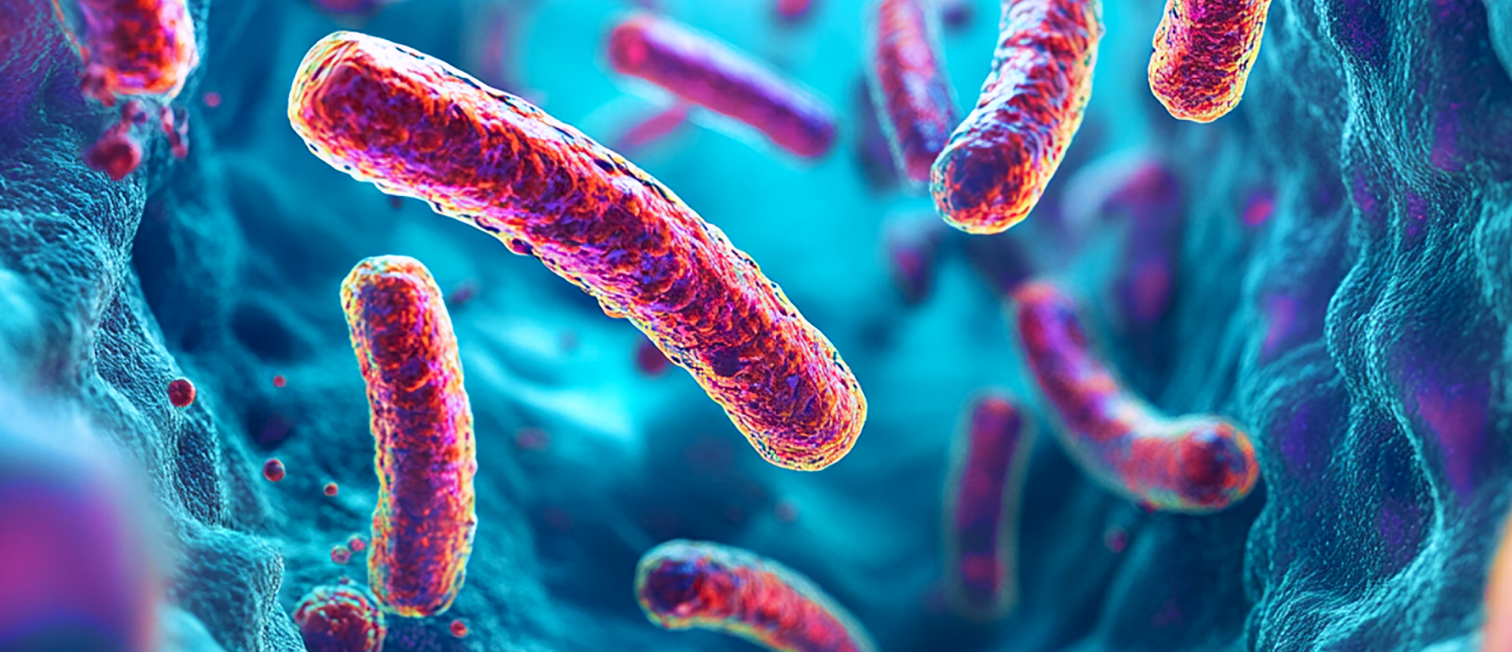
Getting into our intestines, probiotic microorganisms must first adapt to the surrounding, intestinal environment. And it is significantly different from the environments in which they have been repeatedly cultivated during their production. And a large part of them will not be able to adapt in it and will not begin to develop. Secondly, those that adapt must find nutrients suitable for their development. But we do not always consume foods suitable for the relevant microorganisms. Therefore, some of those that have adapted will also not begin to develop. Thirdly, in order to develop and multiply in the long term, microorganisms must settle in our intestines. And not just anywhere, but in the biofilm, which is located on the mucous membrane of the epithelium and where our own (resident) bacteria live. There is simply no other place where they can gain a foothold. The biofilm completely covers our intestines from the inside. But the protective function of our local immune system and many of the metabolites of our resident microbiota is to prevent any foreign microorganisms from entering it. It cannot be otherwise. Otherwise, the biofilm would be colonized by all kinds of harmful and other microorganisms that would constantly disrupt the balance in our intestinal ecosystem. And the microorganisms contained in probiotics are foreign to our organism. And the fate of the ingested probiotic microorganisms will be like that of all “guests” – to remain in a state of free-floating (planktonic) form in the remains of undigested food. Thus, together with the food remains, they will transit through the lumen of our intestines and will be excreted from the body with the next bowel movement. In addition, the multiplication of foreign microorganisms above a certain amount, usually above 1 million (1x10 6 CFU/g), triggers an immune response, both from the local and systemic immunity. This response has a bacteriostatic (suppressive) and bactericidal (destructive) effect on foreign microorganisms, which leads to inhibition (stopping) of their development or to their inactivation (destruction). This determines the weak development and small population of the probiotic microorganisms taken with the probiotic and, accordingly, the production of a negligible amount of metabolites.
Conclusion. Many of the microorganisms contained in probiotics will not adapt to the intestinal environment, will not find suitable nutrients and will not develop. The rest cannot colonize the intestinal tract and during the short time of their transit through the intestinal lumen and the adverse impact of the immune system and the metabolites of the resident microbiota on them, they will develop poorly, create a small population and produce insufficient metabolites necessary for a noticeable probiotic effect.
POSTBIOTIC REVOLUTION
To overcome the shortcomings of probiotics, a next generation of "biotic" products has emerged in recent years - POSTBIOTICS .
Postbiotics are devoid of all the disadvantages of probiotics, since they do not contain living microorganisms that require storage under certain conditions, need special coatings, and have to cope with many insurmountable factors in order to produce the metabolites necessary for the body. They directly contain all these metabolites. And in sufficient quantities. But produced by probiotic microorganisms outside the body, in optimal nutrient environments and excellent conditions created for them.
By taking a postbiotic, we receive all the metabolites that probiotic microorganisms have produced under ideal conditions.
Postbiotics are innovative products. They contribute to balancing the resident microbiota, improving epithelial barrier functions, modulating local and systemic immune responses, regulating systemic metabolic reactions and systemic signaling through the nervous system, as well as preventing the occurrence of many undesirable processes in the body.