



 Bestseller

Skin maintenance with postbiotic "Bibiotic"

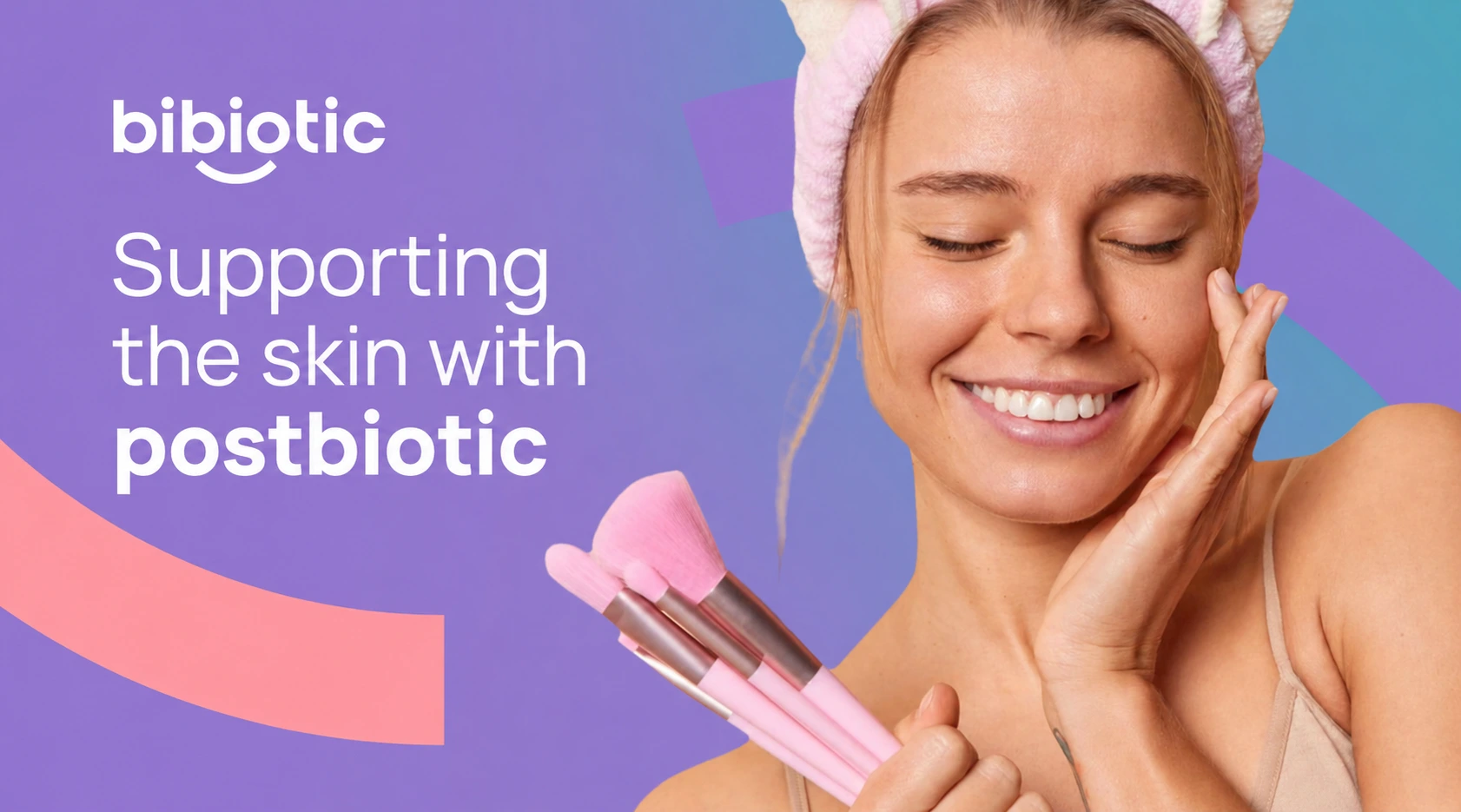
Scientific studies from around the world prove the existence of a connection between the intestinal microbiota and skin health. The diversity of bacteria, viruses, fungi and other microorganisms found in the intestinal tract plays a huge role in many aspects of a person's overall health, including skin health.
Interaction of the intestinal microbiota with the skin.
The gut-skin connection is a concept that describes several mechanisms by which the intestinal system interacts with the skin. The gut microbiome contains trillions of bacteria that play crucial roles in digestion, the production of certain vitamins, the immune response, and stress. Disturbances in the microbiome (dysbiosis) can lead to inflammation that can have systemic effects throughout the body, including on the skin:
- Digestion : through nutrition, skin cells receive important nutrients. If the intestines do not function properly, the absorption of important nutrients for skin health, such as vitamins, amino acids, trace elements, etc. can be impaired and lead to dryness and peeling, rashes and inflammation, pigmentation disorders, increased sensitivity, etc.
- Permeation through the intestinal barrier: if the epithelial barrier is compromised (often referred to as “leaky gut”), toxins and pathogenic microorganisms can pass into the bloodstream and cause inflammatory reactions in other parts of the body, including the skin, such as acne, psoriasis, eczema, rosacea, urticaria, and various nonspecific dermatitis and inflammatory skin conditions.
- The immune response: The gut is a hub of the immune system. Allergies that cause inflammation in the gut can cause inflammatory skin reactions such as rashes, hives, eczema, etc.
- The stress response: Stress can cause inflammation in the gut, which in turn affects the skin. Both systems are linked to the neuroendocrine system, which responds to stress. The reaction on the skin can be dryness and dehydration, increased sensitivity to irritation and infection, reduced blood circulation and nutrient delivery to the skin, etc.
This interaction between the gut and skin highlights the importance of good gut health for maintaining good skin condition.
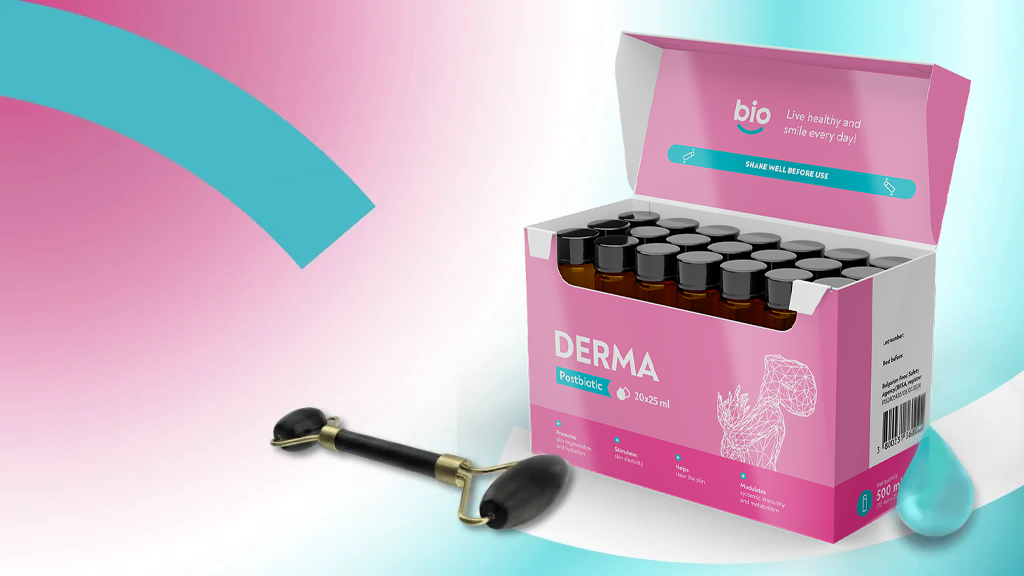
The postbiotic Bibiotic Derma and intestinal well-being
POSTBIOTICS Bibiotic Derma is an innovative product, part of the “biotics” family. POSTBIOTICS Bibiotic Derma is a product that combines all the advantages of probiotics, prebiotics and synbiotics, but none of their disadvantages. It does not contain live microorganisms, but only the metabolites produced by them, as well as the inactivated cells of these microorganisms, their structural components and bioactive substances. In other words, bibiotic gives us all the beneficial substances that are necessary for the rapid balancing of the intestinal microbiota, while at the same time stimulating the development of our own bacteria, which in turn guarantees a long-lasting effect after taking it.
POSTBIOTIC Bibiotic Derma is a completely natural and naturally created by the activity of probiotic bacteria preparation, belonging to the group of “natural” postbiotics (there are also “synthetic” ones). It is an effective means of restoring and maintaining the intestinal microbiota, improving the barrier function of the intestinal epithelium, regulating systemic metabolic reactions, modulating local and systemic immune responses and systemic interaction with the nervous system. Or in short: POSTBIOTIC Bibiotic Derma is a powerful means of maintaining intestinal well-being.
The postbiotic Bibiotic Derma and its beneficial effects on the skin
POSTBIOTICS Bibiotic Derm affects the skin in two ways:
- Beneficially influencing intestinal well-being .
- Providing the body with metabolites that have a beneficial effect on the skin .
"Bibiotic", having a beneficial effect on intestinal well-being, will :
- improve digestion , which will contribute to the effective breakdown of food and the absorption of important nutrients necessary for skin health, such as vitamins, minerals, antioxidants, etc.
- improve epithelial barrier functions, preventing toxins from entering the bloodstream and reducing the occurrence of inflammatory reactions on the skin;
- modulates the immune response , which will lead to a decrease in sensitivity to allergens and a reduction in skin inflammation;
- mitigates the body's stress reactions , reducing the possibility of the appearance of associated unwanted skin problems.
"Bibiotic" will provide the body with a number of metabolites that have various beneficial effects on the skin, such as :
- Пептидогликани: компоненти от стените на бактериалните клетки, които активират клетъчни рецептори и сигнални пътища. Това води до синтез на различни молекули, важни за поддържането на еластична, здрава, хидратирана и млада кожа. Тези молекули включват:
- Collagen: a major structural protein that provides strength and elasticity to the skin.
- Elastin: a protein that helps the skin recover after deformation.
- Glycosaminoglycans, including hyaluronic acid: retain water and promote hydration.
- Ceramides: lipid molecules that enhance the skin's barrier function.
- Fibronectin: a glycoprotein that assists in wound healing.
- Proteoglycans: combine proteins and glycosaminoglycans, key to skin structure and hydration.
- Polysaccharides: long-chain sugars, components of the outer shell of microorganisms that play a role in immune regulation and maintaining skin hydration.
- Telluropeptides: small protein fragments that stimulate the production of collagen, elastin and hyaluronic acid.
- Exopolysaccharides (EPS): stimulate skin repair processes. EPS often act as humectants, attracting and retaining moisture in the epidermis, which helps maintain skin elasticity and firmness. They can also stimulate skin cells to intensify their regenerative activity and the production of important moisturizing factors such as hyaluronic acid and other glycosaminoglycans.
- Short Chain Fatty Acids (SCFA): acetate, propionate and butyrate. Improves the well-being of skin cells and contributes to its hydration and anti-inflammatory responses. Acetate helps regulate the pH levels and hydration of the skin. Propionate has anti-inflammatory properties and is involved in the regulation of lipid production in the skin, while butyrate is known for its protective and restorative functions.
- Other bacterial cell fragments: particles of bacterial cell walls that modulate the skin's immune response and help it repair itself.
- Vitamin-like components: vitamin-like molecules that function similarly to vitamins, supporting skin well-being through antioxidant protection and supporting cell growth.
- Bioactive peptides: short sequences of amino acids that have anti-inflammatory, antimicrobial and antioxidant properties, helping to improve skin condition and prevent aging.
In conclusion:
- POSTBIOTICS Bibiotic Derma is an innovative preparation for restoring and maintaining the intestinal ecosystem. And the state of the intestinal ecosystem is directly related to the state of the skin. By maintaining the intestinal ecosystem at the right level, Bibiotic will also help maintain the well-being of the skin at the necessary level, preventing the occurrence of many unwanted skin problems.
- POSTBIOTICS Bibiotic Derma will provide the body with various metabolites that have a significant impact on the hydration, elasticity, strength, aging and regeneration of the skin, as well as contribute to its overall well-being.
Beautiful skin is the main feature of beauty. Don't neglect it and take care of it!